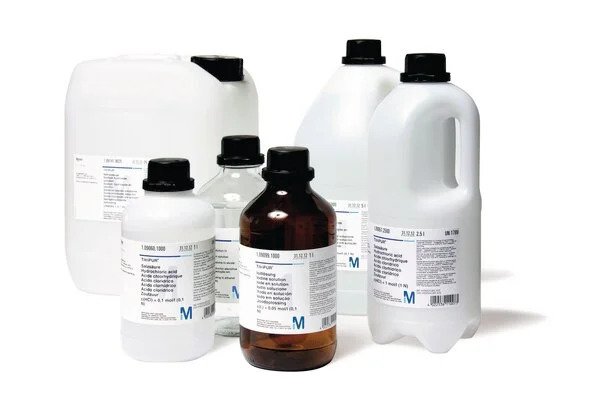
Description
Specifications Table
| Product Name | Tetrahydrofuran HPLC Grade R |
|---|---|
| Quantity/Pack Size | 2.5 LTR |
| Form | Liquid |
| Grade | HPLC |
| Application | Chromatography, laboratory solvent, analytical testing |
Product Description
When precision matters in your lab work, the quality of your solvents can make all the difference. Tetrahydrofuran (THF) HPLC Grade R from Merck is designed for researchers, students, and educators who demand consistency and reliability in their chromatography applications. This high-purity solvent ensures minimal interference, making it a trusted choice for HPLC, GC, and other analytical techniques.
Unlike technical or industrial-grade THF, this HPLC-grade variant undergoes rigorous purification to remove impurities that could skew your results. Whether you’re separating complex mixtures, analyzing pharmaceutical compounds, or conducting academic research, this solvent delivers the clarity and accuracy your experiments require. The low UV absorbance and residual content make it particularly suitable for sensitive detectors, ensuring your data remains uncompromised.
At eqipped, we understand the importance of sourcing lab supplies that meet stringent standards without unnecessary hassle. That’s why we offer this Merck-certified THF in a convenient 2.5-liter pack, giving you enough volume for multiple experiments while maintaining freshness. No more last-minute shortages or questionable quality—just dependable performance every time.
Upgrade your lab’s solvent standards today. Buy Tetrahydrofuran HPLC Grade R online and experience the difference purity makes.
One of the standout features of this THF is its stability under typical lab conditions. Properly stored in a cool, dry place away from direct sunlight, it maintains its integrity, reducing the risk of degradation that could affect your results. This stability is crucial for long-term projects or batch testing where consistency across samples is non-negotiable.
For educators, this solvent is an excellent teaching tool. Demonstrating chromatography principles becomes more effective when students see firsthand how a high-quality solvent impacts separation efficiency. The clear, colorless liquid also makes it easier to observe processes in real time, enhancing the learning experience.
Researchers working on drug development, environmental analysis, or material science will appreciate how this THF minimizes background noise in their readings. Its compatibility with a wide range of detectors and columns adds to its versatility, making it a staple in both routine and specialized lab workflows.
Need a reliable HPLC solvent for your next project? Shop Tetrahydrofuran HPLC Grade R now and ensure your research stays on track.
FAQs
What makes HPLC-grade THF different from other grades?
HPLC-grade THF undergoes additional purification steps to remove impurities like peroxides, water, and UV-absorbing compounds. This ensures it won’t interfere with chromatographic separations or detector sensitivity, unlike technical or reagent grades.
Can I use this THF for GC applications?
Yes, this high-purity THF is suitable for gas chromatography (GC) as well. Its low residual content makes it ideal for sensitive GC detectors, though you should always verify compatibility with your specific instrument and method.
How should I store Tetrahydrofuran to maintain its quality?
Store the bottle in a cool, dry place away from direct sunlight and ignition sources. Keep it tightly sealed when not in use to prevent moisture absorption or peroxide formation. For long-term storage, consider adding a molecular sieve to the container.
Is this THF suitable for use in UV detection systems?
Absolutely. This HPLC-grade THF has minimal UV absorbance, making it perfect for UV-VIS detectors commonly used in HPLC. It won’t introduce background noise that could obscure your sample peaks.
What precautions should I take when disposing of THF waste?
Tetrahydrofuran is a hazardous waste and should never be poured down the drain. Collect waste in a designated flammable liquid waste container and dispose of it through a licensed hazardous waste disposal service, following your institution’s protocols.