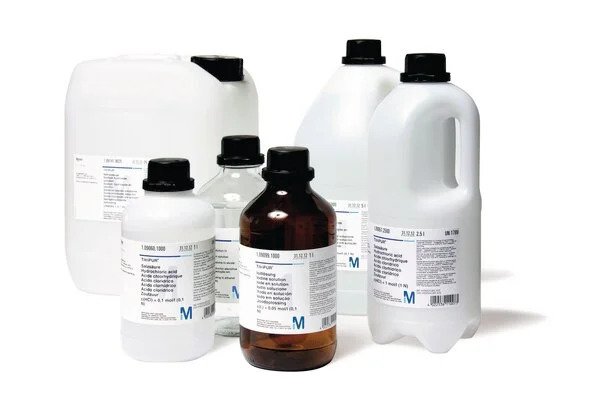
Description
Specifications Table
| Product Name | Dextrose Anhydrous Pfd 5 Kg |
|---|---|
| Quantity/Pack Size | 5 Kg |
| Form | Powder |
| Grade | Laboratory Grade |
| Application | Microbiology, Biochemistry, Research |
Product Description
Dextrose Anhydrous Pfd 5 Kg | 61780950001730 | Merck is a premium-quality anhydrous glucose reagent manufactured for microbiology, biotechnology, pharmaceutical research, fermentation studies, and analytical laboratory applications. Produced under stringent quality standards, it provides excellent purity, stability, and consistent batch-to-batch performance.
Dextrose Anhydrous is extensively used in culture media preparation, biochemical assays, microbial fermentation, reagent formulation, and life science research. The economical 5 kg pack is suitable for laboratories and production facilities with high-volume requirements while ensuring dependable analytical performance and reproducible results.
Merck Dextrose Anhydrous Pfd 5 Kg is an excellent choice for pharmaceutical companies, research institutes, universities, biotechnology laboratories, and industrial quality control facilities.
FAQs
What is the shelf life of Dextrose Anhydrous?
The shelf life is typically 2-3 years when stored under recommended conditions. Always check the expiration date on the packaging.
Can this dextrose be used for food applications?
No, this product is laboratory-grade and not intended for food or pharmaceutical use. For food-grade dextrose, look for products labeled accordingly.
How do I prepare a 1% dextrose solution?
Dissolve 10 grams of Dextrose Anhydrous in 1 liter of distilled water. Stir until fully dissolved and sterilize if required for your application.
Is this product suitable for plant tissue culture?
Yes, Dextrose Anhydrous is commonly used in plant tissue culture media as a carbon source. Ensure proper sterilization before use.
What is the difference between dextrose monohydrate and anhydrous?
Dextrose monohydrate contains one molecule of water per glucose unit, while the anhydrous form is water-free. The anhydrous variant is preferred for applications requiring precise concentrations.