Description
Specifications Table
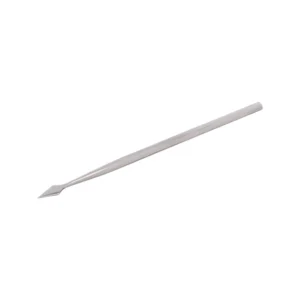
Product Name – Arrow
Quantity/Pack Size – Single Piece
Form – Solid Apparatus
Grade – Laboratory Grade
Application – Motion study, projectile experiments, physics demonstrations
Product Overview
The arrow is a simple yet vital physics laboratory apparatus used to study motion, force, and projectile principles. Its streamlined design allows students to understand real-world applications of Newton’s laws, velocity, and trajectory. Ideal for demonstrations and experiments, the arrow is commonly used in schools, colleges, and research institutions across India to simplify complex physics concepts through hands-on practice.
Academic Use
In schools and colleges, arrows are used in physics experiments to explain projectile motion, direction of force, and principles of dynamics. They help make theoretical lessons interactive and engaging.
Industrial Use
While primarily academic, arrows may also be used in training centers and workshops to demonstrate motion, trajectory, and force in applied mechanics.
Institutional Use
Teacher training institutes, science museums, and research centers use arrows in practical demonstrations and experiments to enhance teaching methods and interactive learning.
FAQs
What is the use of an arrow in physics labs?
It is used for studying projectile motion, direction of force, and motion principles.
Is the arrow suitable for school-level experiments?
Yes, it is widely used in school and college physics laboratories for teaching motion and trajectory.
Can the arrow be used for demonstration of forces?
Yes, it is often used to represent vectors and directions in classroom demonstrations.
How durable is the laboratory arrow?
It is made from sturdy material to withstand repeated use in physics experiments.
What material is the arrow generally made of?
It is usually made from lightweight wood, metal, or durable plastic depending on the lab requirement.