Description
Specifications
Product Name – Polarimeter
Quantity/Pack Size – Single Unit
Form – Optical Instrument
Grade – Laboratory Grade
Application – Optical Rotation Measurement, Substance Analysis, Light Polarization Studies
product overview
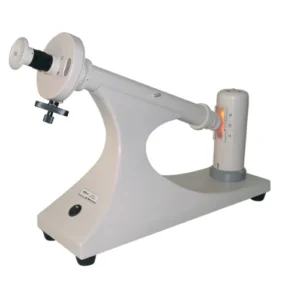
The Polarimeter is a precision optical instrument crafted to measure optical rotation with exceptional accuracy and consistency. Built from high-quality laboratory-grade materials, it provides durability and long-lasting performance in demanding laboratory environments. Its carefully designed optics and robust construction ensure minimal errors during measurements, delivering highly reliable results. The instrument features a well-calibrated scale and stable mounting design, reducing vibration and interference for consistent readings.
The Polarimeter is engineered with a smooth adjustment mechanism that enhances user control, allowing fine-tuning for optimal accuracy. Its durable housing protects the internal optical components, ensuring they remain aligned and efficient even after frequent use. The instrument’s design supports stability, precision, and repeatability, making it suitable for complex optical measurements where dependability is paramount.
By combining strength, accuracy, and user-friendly operation, the Polarimeter ensures dependable performance across diverse optical measurement requirements. The solid construction guarantees consistent results over time, while the clear optical pathway provides sharp, easily readable observations. Its laboratory-grade build and robust design make it a trusted tool for accurate and repeatable measurements, enhancing efficiency and precision in laboratory settings.
FAQs
1. What type of measurements can the Polarimeter perform?
It measures the angle of optical rotation caused by light passing through optically active substances.
2. Is the Polarimeter compatible with standard laboratory accessories?
Yes, it is designed to be used with standard laboratory accessories for optical measurement experiments.
3. What are some alternatives to using a Polarimeter?
Alternatives include spectrophotometers or refractometers, depending on the required type of measurement.
4. How should the Polarimeter be stored after use?
It should be stored in a clean, dry place, protected from dust, direct sunlight, and moisture exposure.
5. Where can genuine laboratory Polarimeters be obtained?
They can be sourced from authorized suppliers and certified laboratory equipment distributors ensuring quality and authenticity.