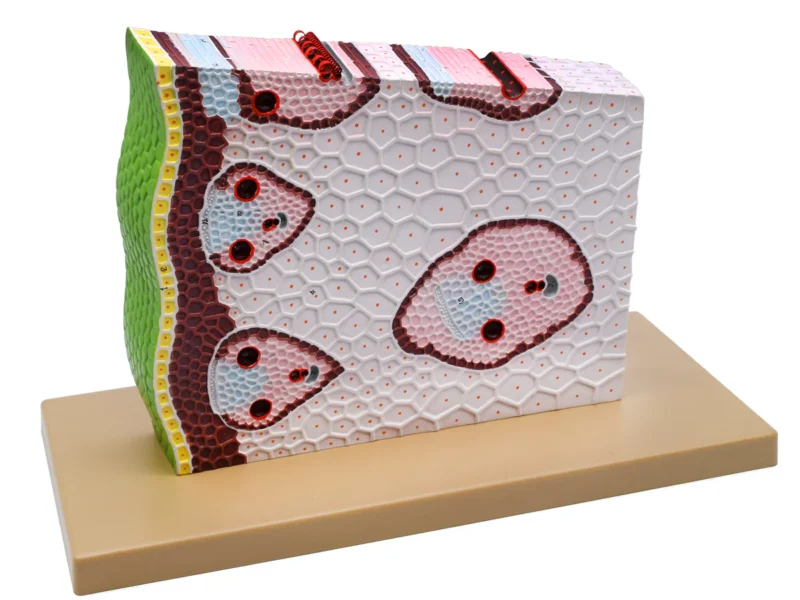
Description
Specifications
Product Name – Meiosis Model
Quantity/Pack Size – Single Unit
Form – Solid, Color-Coded Cellular Structure
Grade – Laboratory Grade
Application – Cell Division Study, Cytogenetics, Chromosome Visualization
product overview
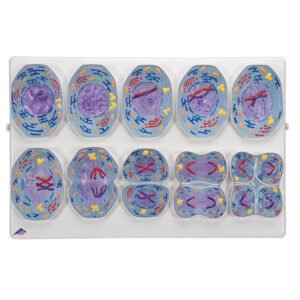
The Meiosis Model is a detailed representation of the complex process of meiosis, demonstrating the sequential stages of cell division from prophase I through telophase II. Constructed with high-quality laboratory-grade materials, this model ensures durability and longevity under repeated handling, maintaining structural precision. Each phase of meiosis is distinctly illustrated, including homologous chromosome pairing, crossing-over, and segregation events, providing clear visual understanding of genetic recombination and chromosomal behavior. Color-coded chromosomes and spindle apparatus highlight critical elements, allowing easy differentiation of maternal and paternal chromosomes. The model emphasizes essential cellular features such as the nuclear envelope breakdown, formation of tetrads, kinetochore orientation, and cytokinesis, offering a comprehensive view of meiosis mechanics. Its three-dimensional, compact design ensures stable display and examination from multiple angles, facilitating detailed observation of chromosomal alignment, reduction division, and the formation of four genetically distinct daughter cells. The Meiosis Model combines accuracy, clarity, and durability, serving as an effective tool for visualizing the fundamental processes of genetic inheritance, chromosome behavior, and cellular division, while maintaining realistic structural representation for laboratory study or reference purposes.
FAQs
1. Can the Meiosis Model demonstrate both meiosis I and II?
Yes, all stages of meiosis I and II are illustrated, including chromosome pairing, segregation, and cytokinesis.
2. Is this model compatible with mitosis models for comparison?
Yes, it can be displayed alongside mitosis models to highlight differences in chromosomal behavior and division mechanisms.
3. Are there alternative models for genetic studies?
Yes, options include mitosis models, homologous chromosome models, and crossover-specific cellular models for detailed study.
4. How should the Meiosis Model be stored to preserve quality?
Store in a clean, dry location, away from direct sunlight and excessive heat to maintain structural integrity and color clarity.
5. Can multiple units be ordered for laboratory setups?
Yes, bulk orders are available to meet the needs of laboratories, instructional setups, or demonstration purposes.