Description
Specifications
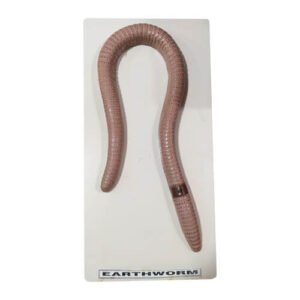
Product Name – Earthworm Model
Quantity/Pack Size – Single Unit
Form – Solid, Color-Coded Anatomical Structure
Grade – Laboratory Grade
Application – Anatomy Visualization, Dissection Reference, Comparative Zoology
product overview
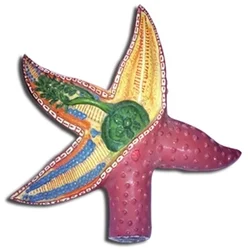
The Earthworm Model provides an accurate and detailed representation of the internal and external anatomy of an earthworm, highlighting the segmented body structure characteristic of annelids. Made from durable laboratory-grade materials, this model ensures long-lasting usability and precision in illustrating all anatomical features. Key structures, including the digestive tract, circulatory system with dorsal and ventral blood vessels, excretory nephridia, reproductive organs, and nervous system components, are distinctly color-coded for easy identification. The model also emphasizes the segmentation pattern, setae placement, and body wall arrangement, providing a three-dimensional perspective for comprehensive study. Each organ and structure is proportionally represented, allowing clear visualization of functional relationships within the body. The robust and stable design supports repeated handling and observation, while its compact construction makes it suitable for laboratory display and examination. The Earthworm Model serves as a practical tool for understanding complex anatomical arrangements, offering an interactive and visually precise reference for the study of invertebrate morphology and organ systems. Its clarity, detailed coloration, and structural accuracy make it a reliable laboratory-grade model for repeated use in research, study, and demonstration.
FAQs
1. Does the Earthworm Model show internal organs clearly?
Yes, all major internal organs such as digestive, circulatory, excretory, and reproductive systems are clearly represented and color-coded.
2. Can this model be used alongside other invertebrate models?
Yes, it is compatible with comparative anatomy studies using other invertebrate or segmented worm models for detailed observation.
3. Are there alternative models for annelid anatomy?
Yes, alternatives include cross-sectional worm models, detailed reproductive system models, and microscopic anatomical charts for comparative studies.
4. How should the model be stored when not in use?
Store in a dry, clean environment, avoiding direct sunlight or high humidity to maintain color integrity and material durability.
5. Is bulk ordering available for educational laboratories?
Yes, multiple units can be purchased to equip classrooms, research labs, or demonstration setups efficiently.