Description
Specifications
Product Name – Typical Flower Model
Quantity/Pack Size – Single Unit
Form – Solid Botanical Replica, Color-Coded
Grade – Laboratory Grade
Application – Botanical Study, Structural Observation, Comparative Plant Morphology
product overview
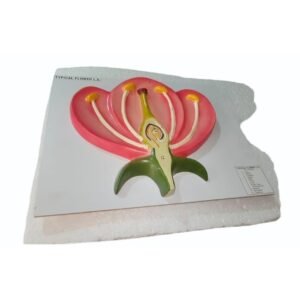
The Typical Flower Model provides a highly detailed and accurate representation of a flower’s anatomy, highlighting all major organs and structural components with clarity. Crafted from laboratory-grade materials, the model is durable and resistant to wear, allowing repeated handling without degradation. Color-coded features include the sepals, petals, stamens, pistil, ovary, and associated structures, enabling easy identification and differentiation between organs. The spatial arrangement of floral parts is illustrated in three dimensions, demonstrating the natural positioning and interconnections between reproductive and vegetative organs. The model emphasizes critical details such as ovules, anther, filament, stigma, style, and receptacle, providing a comprehensive view of the floral structure. Its compact, stable design ensures safe handling and convenient display for examination. The segmented organs allow in-depth observation and study of organ morphology and relative positioning, enhancing understanding of botanical organization. The model’s realistic size, texture, and coloration offer a lifelike representation suitable for laboratory visualization and structural exploration. Overall, this model combines precision, durability, and clarity to serve as a reliable tool for botanical structure visualization and practical study in laboratory settings.
FAQs
1. Does this model show all internal and external flower parts?
Yes, it accurately depicts sepals, petals, stamens, pistil, ovary, and supporting structures for complete visualization.
2. Can it be used alongside other plant models?
Yes, it is compatible with additional botanical models for comparative studies and comprehensive morphological analysis.
3. Are there smaller or simplified flower models available?
Yes, alternative models focusing on individual organs or smaller flowers are available for specialized observation.
4. What storage conditions are recommended for this model?
Store in a clean, dry area away from direct sunlight and excessive moisture to maintain color and material quality.
5. Can multiple units be ordered for laboratory use?
Yes, bulk orders are supported for classrooms, laboratories, and educational institutions requiring several models.