Description
Specifications Table
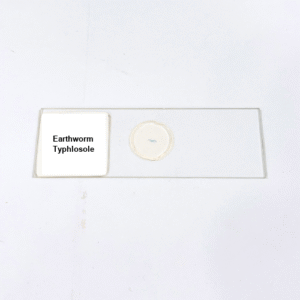
Product Name – Earthworm Typhlosole (T.S.)
Quantity/Pack Size – 1 Slide
Form – Transverse Section
Grade – Laboratory Grade
Application – Observation of intestinal folds and epithelial tissue under microscope
Product Overview
The Earthworm Typhlosole T.S. slide presents a high-quality transverse section of the intestinal typhlosole, allowing detailed observation of internal tissue architecture. The specimen is meticulously prepared to preserve the central longitudinal fold and the surrounding epithelial and muscular layers, ensuring structural integrity for clear microscopic examination. Staining is applied to differentiate cellular components, highlighting the mucosal lining, connective tissue, and vascular structures. Mounted under a coverslip, the slide provides long-lasting clarity and stability, suitable for repeated laboratory observations. This preparation emphasizes the arrangement and morphology of intestinal folds, the epithelial lining, and supportive connective tissues, enabling accurate visualization of the typhlosole’s structure. Each slide undergoes stringent quality control to maintain consistent staining, minimal distortion, and precise anatomical representation. Durable and laboratory-grade, the Earthworm Typhlosole T.S. slide is ideal for researchers and students seeking detailed insights into invertebrate intestinal morphology, allowing careful examination of tissue layers, folds, and cellular organization under varying magnifications with confidence and accuracy.
1. What structural details are visible on the Earthworm Typhlosole slide?
Central longitudinal fold, epithelial lining, muscular layers, connective tissue, and vascular structures are clearly visible for detailed study.
2. Can this slide be used with standard laboratory microscopes?
Yes, it is compatible with conventional optical microscopes for laboratory tissue analysis and observation.
3. Are there alternative slides for comparative digestive system studies?
Yes, alternatives include Earthworm Gizzard T.S., Earthworm Pharynx T.S., and Earthworm Oesophagus slides for comparative morphology.
4. How should the slide be stored for long-term quality?
Store in a dry, dust-free location, away from direct sunlight and moisture to maintain tissue integrity and staining quality.
5. What is the source of specimens for this slide?
Specimens are procured from certified laboratory suppliers and prepared under strict laboratory-grade standards for accuracy and consistency.