Description
Specifications Table
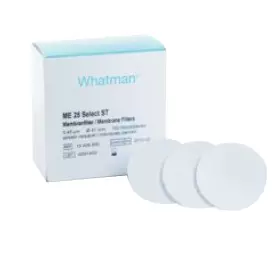
| Product Name | Whatman ME28/41 ST Membrane Filter | 10408472 |
|---|---|
| Pack Size | 50MM, 1.2µM (Pack of 100) |
| Form | Membrane Filter |
| Grade | ME28/41 ST |
| Application | Microbiological analysis, particle filtration, sterile filtration |
Product Description
When precision matters in your lab, the Whatman ME28/41 ST Membrane Filter delivers reliable performance for critical filtration tasks. Designed with a 1.2µm pore size, this cellulose ester membrane ensures efficient particle retention while maintaining high flow rates. Whether you’re conducting microbiological tests, clarifying solutions, or preparing samples for analysis, this filter provides consistent results every time.
Whatman is a trusted name in laboratory filtration, and the ME28/41 ST series is no exception. The membrane’s smooth surface minimizes clogging, making it ideal for high-throughput applications. Researchers and students alike rely on these filters for their durability and compatibility with a wide range of solvents and aqueous solutions.
At eqipped, we understand the importance of quality lab supplies. That’s why we stock genuine Whatman products to ensure your experiments run smoothly. Whether you’re setting up a new lab or restocking essentials, this pack of 100 filters offers great value without compromising on performance.
Upgrade your lab filtration setup today. Buy Whatman ME28/41 ST Membrane Filter online for fast, reliable delivery.
Key Applications
The versatility of the Whatman ME28/41 ST Membrane Filter makes it suitable for various laboratory applications:
For microbiological analysis, the 1.2µm pore size effectively captures bacteria and other microorganisms, making it perfect for water testing, food safety checks, and environmental monitoring. Researchers in molecular biology use these filters for sample preparation before PCR or sequencing.
In pharmaceutical labs, these membranes play a crucial role in sterile filtration of buffers and media. The consistent pore size distribution ensures reliable sterilization, which is essential for maintaining aseptic conditions. Educational institutions also favor these filters for student experiments due to their ease of use and consistent performance.
Industrial applications include particle analysis in manufacturing processes and quality control testing. The filter’s compatibility with aggressive solvents makes it valuable in chemical analysis and research.
Why This Filter Stands Out
Not all membrane filters are created equal. The Whatman ME28/41 ST offers several advantages that set it apart:
The cellulose ester composition provides a balance of strength and flexibility, reducing the risk of tears during handling. Unlike some synthetic membranes, this filter maintains its integrity even when wet, ensuring reliable performance throughout your experiment.
The uniform pore structure guarantees consistent filtration results, which is critical when reproducibility matters. You’ll notice fewer variations between samples compared to lower-quality alternatives.
With a diameter of 50mm, these filters fit standard filtration apparatus, making them compatible with most lab setups. The pack of 100 ensures you always have filters on hand when you need them, reducing downtime in your research.
Proper Usage and Storage
To get the most out of your Whatman ME28/41 ST Membrane Filters, follow these best practices:
Always handle filters with clean forceps to avoid contamination. Before use, rinse the membrane with sterile water or buffer to remove any manufacturing residues. For critical applications, consider pre-wetting the filter with ethanol or another suitable solvent.
Store filters in their original packaging at room temperature, away from direct sunlight and moisture. Proper storage maintains the filter’s integrity and extends its shelf life. If you notice any discoloration or damage to the packaging, it’s best to discard the affected filters.
When disposing of used filters, follow your lab’s biohazard protocols, especially if they’ve been in contact with potentially hazardous materials. Never reuse single-use membrane filters, as this can compromise your results and create contamination risks.
Common Questions About Membrane Filters
Choosing the right membrane filter can be confusing with so many options available. Here are answers to some frequent questions:
Many researchers wonder about the difference between cellulose ester and other membrane materials like PVDF or nylon. Cellulose ester filters like the ME28/41 ST offer excellent protein binding properties, making them ideal for microbiological applications where you want to capture organisms on the surface.
Regarding pore size selection, 1.2µm is perfect for general microbiological work, but you might need smaller pores for viruses or larger ones for particulate removal. Always match the pore size to your specific application requirements.
Some users ask about autoclaving these filters. While cellulose ester membranes can withstand autoclaving, it’s generally better to use sterile, pre-packaged filters for critical applications to avoid potential damage from the autoclaving process.
FAQs
What is the pore size of the Whatman ME28/41 ST Membrane Filter?
The Whatman ME28/41 ST Membrane Filter has a pore size of 1.2 micrometers, making it suitable for general microbiological filtration and particle retention.
Can I use this filter for sterile filtration?
Yes, this membrane filter is commonly used for sterile filtration applications in laboratories, provided you follow proper aseptic techniques during the filtration process.
How many filters come in one pack?
Each pack contains 100 filters, with each filter measuring 50mm in diameter, providing excellent value for regular lab use.
Is this filter compatible with organic solvents?
The cellulose ester composition makes these filters compatible with many organic solvents, though you should always check compatibility for your specific solvent.
What’s the difference between ME28 and other Whatman filter grades?
The ME28 grade offers a balance of flow rate and particle retention, making it versatile for various applications, while other grades may be