Description
Specifications Table
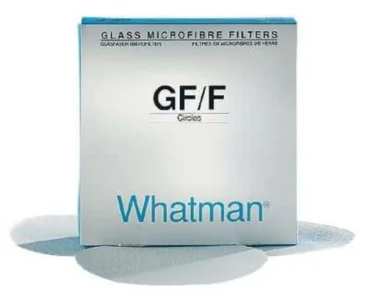
| Product Name | Whatman Grade GF/F Glass Microfibre Filter | 1825-015 |
|---|---|
| Quantity/Pack Size | 15MM (Pack of 100), 2.1CM (Pack of 100), 2.4CM (Pack of 100), 2.5CM (Pack of 100), 3.7CM (Pack of 100), 4.25CM (Pack of 100), 4.7CM (Pack of 100), 5.5CM (Pack of 100), 7CM (Pack of 100), 8.1CM (Pack of 100), 9CM (Pack of 25), 11CM (Pack of 25), 12.5CM (Pack of 25), 14.2CM (Pack of 25), 15CM (Pack of 25), 185MM (Pack of 25), 25.7CM (Pack of 25), 29.3CM (Pack of 25), 30CM x 50M Reel, 46x57CM (Pack of 25) |
| Form | Glass Microfibre Filter |
| Grade | GF/F |
| Application | Liquid scintillation, air monitoring, environmental analysis, and general lab filtration |
Product Description
When precision matters in your lab work, the Whatman Grade GF/F Glass Microfibre Filter stands out as a reliable choice. Designed for researchers, students, and educators, this filter paper is engineered to deliver consistent performance in critical applications like liquid scintillation counting, air pollution monitoring, and environmental sample analysis.
The GF/F grade is known for its fine particle retention, making it ideal for filtering out even the smallest contaminants. Whether you’re working on a university project or a professional research study, this filter ensures clarity and accuracy in your results. Its glass microfiber composition provides durability and chemical resistance, so you can trust it to hold up under demanding conditions.
At eqipped, we understand the importance of having the right tools for your experiments. That’s why we offer a wide range of sizes to fit your specific needs, from small 15MM discs to larger 46x57CM sheets. Each pack is carefully sealed to maintain purity, so you can focus on your work without worrying about contamination.
Upgrade your lab filtration today—buy Whatman GF/F filters online and experience the difference in quality.
One of the key advantages of the Whatman GF/F filter is its versatility. It’s commonly used in environmental testing, where accurate particle analysis is crucial. Researchers in fields like oceanography and atmospheric science rely on these filters to capture fine particulates for further study. Even in educational settings, students benefit from its reliability when conducting experiments in chemistry or biology labs.
If you’re looking for a filter that combines efficiency with ease of use, the Whatman GF/F is a top contender. Its smooth surface allows for even distribution of samples, reducing the risk of clogging and ensuring consistent flow rates. This makes it a favorite among professionals who need dependable results every time.
Shop now and get your Whatman glass microfiber filters delivered quickly—perfect for labs that can’t afford delays.
For those working in sensitive applications, such as radioactive sample preparation, the GF/F filter’s low ash content is a significant benefit. It minimizes interference in downstream analysis, ensuring your data remains accurate. This level of precision is why Whatman filters are trusted in labs worldwide.
When you buy from eqipped, you’re not just getting a product—you’re investing in quality. We source our lab supplies from reputable manufacturers to ensure you receive only the best. Plus, our user-friendly platform makes it easy to find exactly what you need, whether you’re restocking your lab or trying a new filter for the first time.
FAQs
What is the particle retention size of Whatman GF/F filters?
The Whatman GF/F filter retains particles down to 0.7 micrometers, making it suitable for fine filtration tasks.
Can I use GF/F filters for liquid scintillation counting?
Yes, these filters are commonly used in liquid scintillation applications due to their low background interference.
Are these filters autoclavable?
Yes, Whatman GF/F filters can be autoclaved for sterilization, making them ideal for microbiological work.
What sizes are available for the GF/F filters?
We offer a variety of sizes, including 15MM, 2.1CM, 4.7CM, 7CM, and larger sheets up to 46x57CM.
How should I store these filters to maintain their quality?
Store them in a cool, dry place away from direct sunlight to preserve their integrity.