Description
Specifications Table
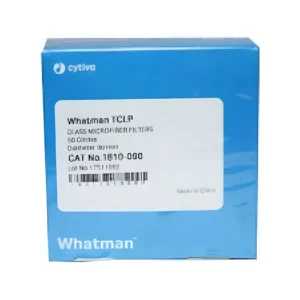
| Product Name | Whatman Grade TCLP Glass Microfibre Filter | 1810-047 |
|---|---|
| Pack Size | 47MM (Pack of 100), 90MM (Pack of 50), 110MM (Pack of 50), 125MM (Pack of 50), 142MM (Pack of 50), 150MM (Pack of 50) |
| Form | Glass Microfiber |
| Grade | TCLP |
| Application | Environmental testing, soil analysis, waste characterization |
Product Description
When it comes to environmental testing, precision and reliability are non-negotiable. The Whatman Grade TCLP Glass Microfibre Filter (1810-047) is engineered specifically for Toxicity Characteristic Leaching Procedure (TCLP) tests, ensuring accurate results in soil, waste, and water analysis. These filters are a staple in labs across India, trusted by researchers, students, and environmental scientists for their consistent performance.
Made from high-purity borosilicate glass microfibers, these filters offer exceptional chemical resistance, making them ideal for aggressive solvents and acidic solutions. The uniform pore structure ensures efficient particle retention while maintaining fast flow rates, saving you time without compromising accuracy. Whether you’re testing hazardous waste, contaminated soil, or industrial effluents, this filter delivers the clarity and reliability your work demands.
At eqipped, we understand the importance of having the right tools for your research. That’s why we stock authentic Whatman filters, ensuring you get lab-grade quality every time. Need a reliable TCLP filter for your next environmental study? Order now and get fast delivery across India.
Why This Filter Stands Out
Not all filters are created equal, especially when dealing with environmental samples. The Whatman TCLP filter is designed to meet strict regulatory standards, making it the go-to choice for compliance testing. Its glass microfiber composition means it won’t degrade or shed particles, even under harsh conditions. This is critical when analyzing samples for heavy metals or organic contaminants, where even minor interference can skew results.
Researchers in India often face challenges with sample variability, but this filter’s consistent performance helps eliminate one variable from the equation. Whether you’re working in a university lab, a government testing facility, or an environmental consulting firm, you can trust these filters to provide reproducible data. Plus, with multiple pack sizes available, you can choose the right quantity for your project’s scale.
Applications in Real-World Testing
From academic research to industrial compliance, the Whatman TCLP filter is versatile enough for a range of applications:
In soil testing, it helps determine leachable contaminants, ensuring safe land use. For waste characterization, it’s essential for identifying hazardous components before disposal. Even in water analysis, these filters play a key role in pre-treatment steps, removing particulates that could interfere with downstream testing.
Students working on environmental science projects will find these filters indispensable for their experiments. Educators can rely on them for consistent results in lab demonstrations. And for professional researchers, they’re a cost-effective way to maintain high standards without frequent replacements.
Choosing the Right Pack Size
With options ranging from 47MM to 150MM, selecting the right size depends on your specific needs. Smaller diameters (47MM) are perfect for low-volume samples or bench-scale tests, while larger sizes (150MM) are better suited for high-throughput or industrial applications. The pack sizes are optimized to reduce waste—whether you need a few filters for a single experiment or bulk quantities for ongoing projects.
If you’re unsure which size to choose, consider the volume of your samples and the filtration setup you’re using. For most standard TCLP tests, the 90MM or 110MM filters strike a balance between capacity and ease of use. Ready to stock up? Browse our selection and pick the pack size that fits your lab’s workflow.
Handling and Storage Tips
To maximize the lifespan of your Whatman TCLP filters, store them in a clean, dry environment away from direct sunlight. Avoid touching the filtration surface to prevent contamination. If you’re working with particularly aggressive chemicals, pre-rinse the filter with a compatible solvent to minimize interference.
Always wear appropriate PPE when handling filters, especially if you’re working with hazardous samples. While these filters are chemically resistant, proper lab safety protocols should always be followed.
FAQs
What is a TCLP filter used for?
A TCLP filter is specifically designed for Toxicity Characteristic Leaching Procedure tests, which determine if waste is hazardous by analyzing leachable contaminants. It’s commonly used in environmental labs for soil, waste, and water testing.
Can I use this filter for non-TCLP applications?
While optimized for TCLP, these filters can also be used for general particulate filtration in environmental and chemical analysis. However, for non-standard applications, verify compatibility with your specific sample matrix.
How do I know which pack size to buy?
Choose based on your sample volume and filtration setup. Smaller diameters (47MM) suit low-volume tests, while larger sizes (150MM) are ideal for high-throughput or industrial-scale work.
Are these filters autoclavable?
Yes, Whatman glass microfiber filters can be autoclaved for sterilization, making them suitable for microbiological applications as well.
Do you offer bulk discounts on these filters?
Yes, eqipped provides competitive pricing on bulk orders. Contact our support team for customized quotes based on your lab’s requirements.