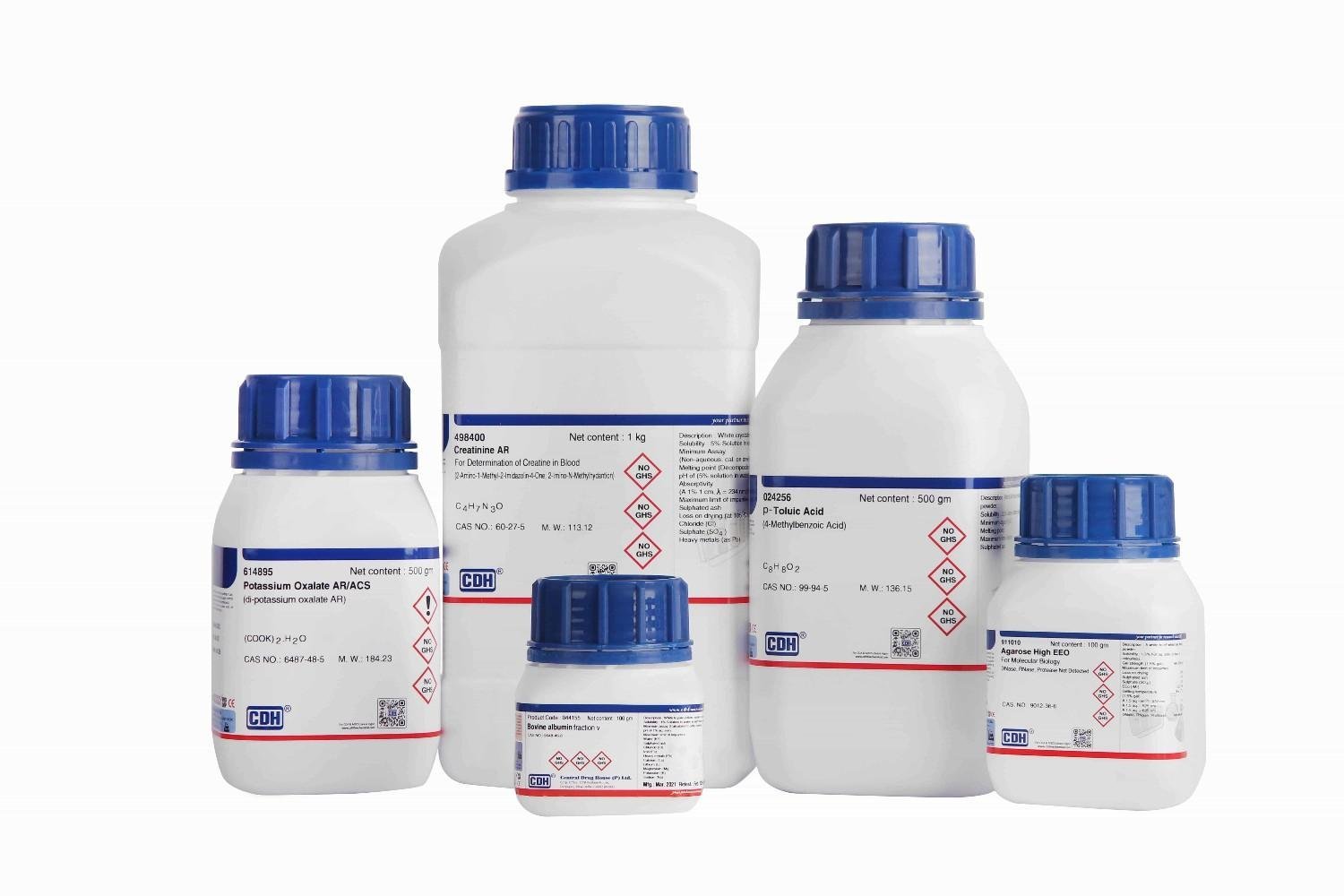
Description
Specifications Table
| Product Name | Ethylene Diamine Tetra Acetic Acid Anhydous Cell Culture Tested | TC1115 | CDH |
|---|---|
| Pack Size | 100 gm, 500 gm |
| Form | Powder |
| Grade | Cell Culture Tested |
| Application | Molecular biology, chelation, cell culture |
Product Description
Ethylene Diamine Tetra Acetic Acid (EDTA) anhydrous is a versatile chelating agent widely used in laboratories for its ability to bind metal ions. This cell culture-tested grade ensures high purity, making it ideal for sensitive applications like molecular biology, DNA extraction, and cell culture media preparation. Whether you’re a researcher, student, or educator, this EDTA variant from eqipped guarantees consistent performance in your experiments.
EDTA anhydrous is particularly valued for its stability and solubility in water, allowing for precise control in biochemical assays. Its role in preventing metal ion interference makes it indispensable in PCR, enzyme assays, and protein purification. For labs prioritizing reproducibility, this product stands out as a reliable choice.
Upgrade your lab workflow with high-quality EDTA anhydrous. Buy online today for seamless delivery across India.
When handling EDTA, always follow standard lab safety protocols. Store in a cool, dry place away from moisture to maintain its efficacy. For bulk requirements or institutional orders, eqipped offers competitive pricing and timely dispatch.
FAQs
What is the difference between EDTA anhydrous and EDTA disodium?
EDTA anhydrous is the free acid form, while EDTA disodium is a salt. The anhydrous form is preferred for applications requiring precise pH control or where sodium ions are undesirable.
Can this EDTA be used for DNA extraction?
Yes, this cell culture-tested EDTA is ideal for DNA extraction as it effectively chelates metal ions that can degrade nucleic acids.
How should I store EDTA anhydrous?
Store in a tightly sealed container at room temperature, away from moisture and direct sunlight.
Is this product suitable for cell culture media?
Absolutely. The cell culture-tested grade ensures compatibility with mammalian cell lines and other sensitive cultures.
Where can I buy EDTA anhydrous online in India?
You can purchase high-quality EDTA anhydrous directly from eqipped with fast shipping and secure payment options.