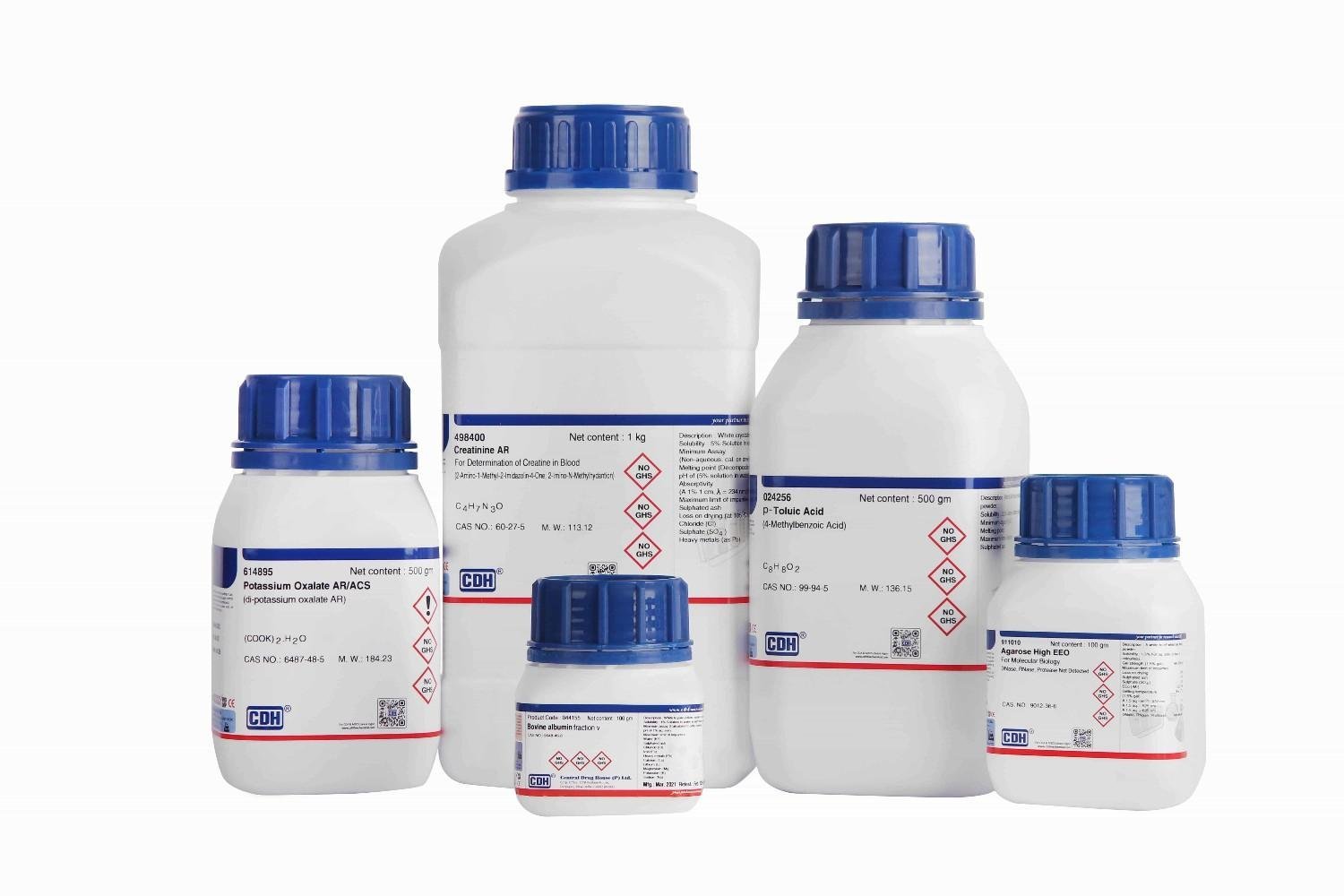
Description
Specifications Table
| Product Name | Silica Gel 60-120 mesh Column Chromatography | 216725 | CDH |
|---|---|
| Pack Size | 500 gm, 5 kg, 25 kg, 50 kg |
| Form | Granular |
| Grade | Chromatography Grade |
| Application | Column chromatography, separation of organic compounds |
Product Description
Silica gel is a highly versatile adsorbent widely used in column chromatography for separating and purifying organic compounds. The 60-120 mesh size offers an optimal balance between flow rate and resolution, making it ideal for both analytical and preparative applications. Whether you’re a student, researcher, or educator, this chromatography-grade silica gel ensures reliable performance in your lab experiments.
At eqipped, we provide high-quality silica gel that meets stringent laboratory standards. Our product is carefully processed to minimize impurities, ensuring consistent results in your chromatographic separations. The uniform particle size distribution enhances efficiency, reducing solvent consumption and improving separation clarity.
This silica gel is particularly effective for separating mixtures of organic compounds with varying polarities. Its high surface area and porosity allow for excellent adsorption capacity, making it a preferred choice in research labs, academic institutions, and industrial settings.
Need silica gel for your next chromatography experiment? Buy silica gel 60-120 mesh online from eqipped for fast and reliable delivery.
Why Silica Gel 60-120 Mesh is Ideal for Column Chromatography
Column chromatography requires a stationary phase that can effectively separate components based on their affinity. Silica gel, with its polar surface, interacts strongly with polar compounds, allowing for precise separation. The 60-120 mesh size is particularly advantageous because:
It provides a good balance between flow rate and resolution. Finer mesh sizes (like 230-400) can slow down elution, while coarser mesh sizes (like 30-60) may reduce separation efficiency. This mesh range is optimal for most laboratory applications.
It is compatible with a wide range of solvents, including hexane, ethyl acetate, and methanol, making it versatile for different separation protocols.
It is cost-effective without compromising on performance, making it a practical choice for both small-scale and large-scale separations.
Applications of Silica Gel in Chromatography
Silica gel 60-120 mesh is commonly used in:
Separation of natural products, such as alkaloids, flavonoids, and terpenes.
Purification of synthetic organic compounds in research and development.
Analysis of pharmaceutical intermediates and active ingredients.
Educational labs for teaching chromatography techniques to students.
If you’re looking for the best silica gel for column chromatography, this product from eqipped is a reliable choice. Its consistent quality ensures reproducible results, which is crucial for both academic and industrial research.
How to Use Silica Gel for Column Chromatography
Using silica gel for column chromatography involves a few key steps to ensure optimal separation:
1. Column Packing: Suspend the silica gel in a suitable solvent (often the same as the mobile phase) and pour it into the column. Tap the column gently to settle the gel and remove air bubbles.
2. Sample Loading: Dissolve your sample in a minimal amount of solvent and carefully load it onto the column. Avoid disturbing the silica gel bed.
3. Elution: Gradually add the mobile phase (or a gradient of solvents) to elute the components. Collect fractions as they exit the column.
4. Analysis: Analyze the collected fractions using TLC or other methods to confirm separation.
Buy silica gel 60-120 mesh online from eqipped and get the best chromatography silica gel for your lab needs.
Safety and Handling
While silica gel is generally safe to handle, it is important to follow standard laboratory practices:
Avoid inhaling silica gel dust, as it can irritate the respiratory tract. Always work in a well-ventilated area or use a fume hood.
Wear appropriate personal protective equipment (PPE), such as gloves and safety goggles, when handling the material.
Store silica gel in a dry, cool place to prevent moisture absorption, which can affect its performance.
Why Choose eqipped for Your Lab Supplies?
At eqipped, we understand the importance of high-quality lab supplies for accurate and reliable results. Our silica gel for chromatography is sourced from trusted manufacturers and undergoes rigorous quality checks to ensure consistency. Whether you need a small quantity for a student project or bulk supplies for a research lab, we’ve got you covered.
With fast shipping, competitive pricing, and a user-friendly online store, buying lab supplies has never been easier. Order silica gel 60-120 mesh online today and experience the eqipped difference!
FAQs
What is the mesh size of this silica gel, and why does it matter?
The mesh size (60-120) refers to the particle size range of the silica gel. A 60-120 mesh size is ideal for column chromatography because it balances flow rate and resolution, ensuring efficient separation without excessive solvent use.
Can this silica gel be used for flash chromatography?
Yes, this silica gel is suitable for flash chromatography, though finer mesh sizes (like 230-400) are often preferred for higher resolution. However, 60-120 mesh works well for many applications, especially when faster flow rates are desired.
How should I store silica gel to maintain its effectiveness?
Store silica gel in an airtight container in a dry, cool place. Exposure to moisture can reduce its adsorption capacity, so it’s best to keep it sealed when not in use.
Is this silica gel suitable for separating polar compounds?
Yes, silica gel is highly effective for separating polar compounds due to its polar surface. It interacts strongly with polar molecules, allowing for precise separation in chromatographic applications.
What solvents are compatible with this silica gel?
This silica gel is compatible with a wide range of solvents, including hexane, ethyl acetate, methanol, and dichloromethane. The choice of solvent depends on the polarity of the compounds you are separating.