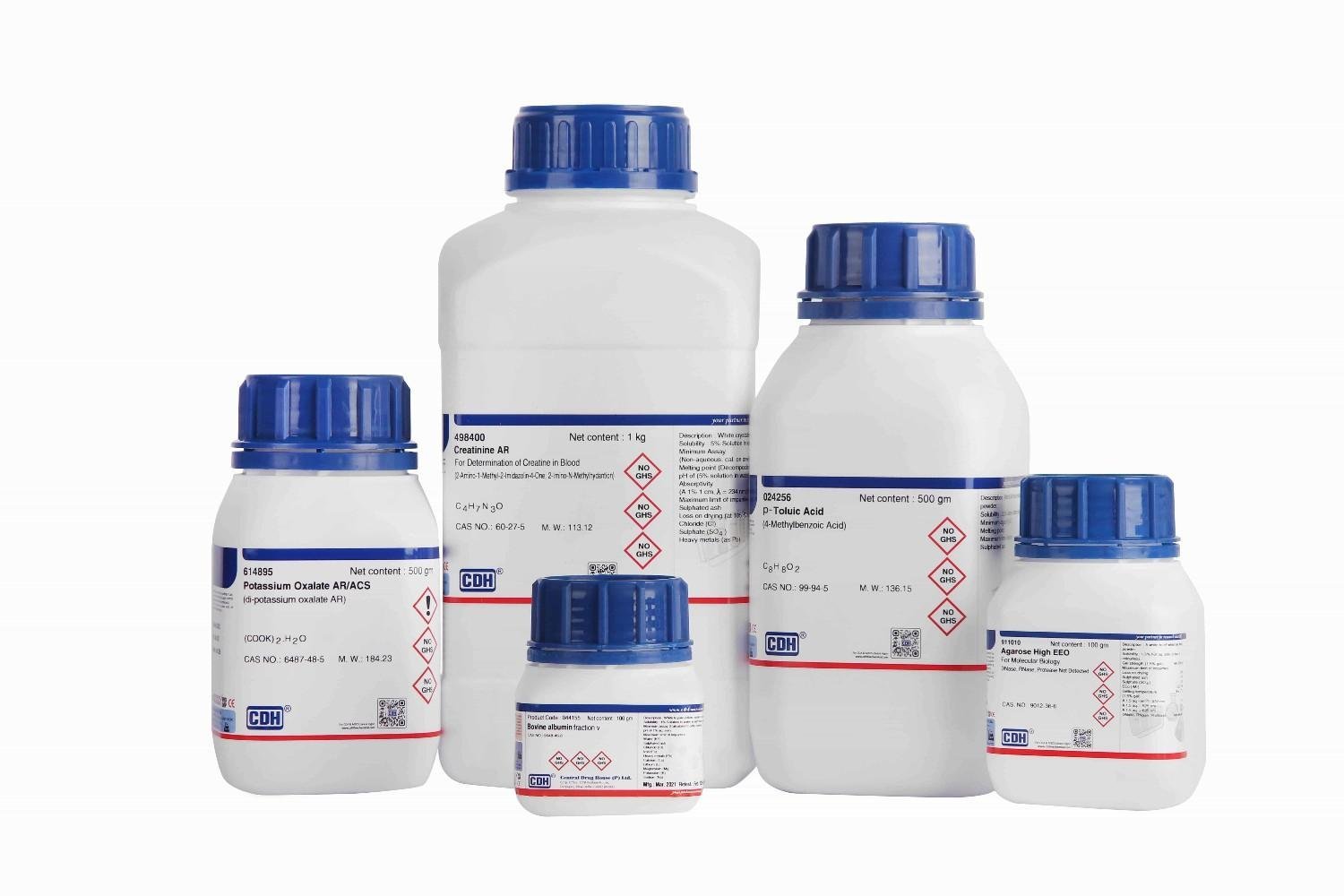
Description
Specifications Table
| Product Name | Bees Wax (White) | 21285 | CDH |
|---|---|
| Pack Size | 500 gm |
| Form | Solid |
| Grade | Chemical Grade |
| Application | Lab research, cosmetics, industrial use |
Product Description
Beeswax is a natural wax produced by honeybees, known for its versatility in laboratory and industrial applications. This white beeswax is purified and refined to meet chemical-grade standards, making it suitable for precise experimental work, cosmetic formulations, and other specialized uses.
With a high melting point and excellent emulsifying properties, white beeswax is a preferred choice for researchers and educators. Its non-toxic nature ensures safety in handling, while its consistency provides reliable results in various applications.
Whether you’re conducting experiments in a lab or developing new products, this beeswax offers the purity and performance you need. eqipped ensures you receive authentic, high-quality beeswax that meets stringent lab requirements.
Need pure beeswax for your next project? Buy white beeswax online today and experience seamless delivery.
FAQs
What is the melting point of white beeswax?
White beeswax typically melts between 62°C to 65°C, making it suitable for various lab applications.
Is this beeswax suitable for cosmetic use?
Yes, this chemical-grade beeswax is purified and safe for cosmetic formulations, though additional testing may be required for commercial products.
Can I use this beeswax for candle making?
Absolutely. Its high purity ensures clean burning and excellent fragrance retention in candles.
How should I store white beeswax?
Store in an airtight container in a cool, dry place to prevent moisture absorption and maintain quality.
Does eqipped offer bulk discounts on beeswax?
Yes, contact our support team for bulk pricing and customized packaging options.