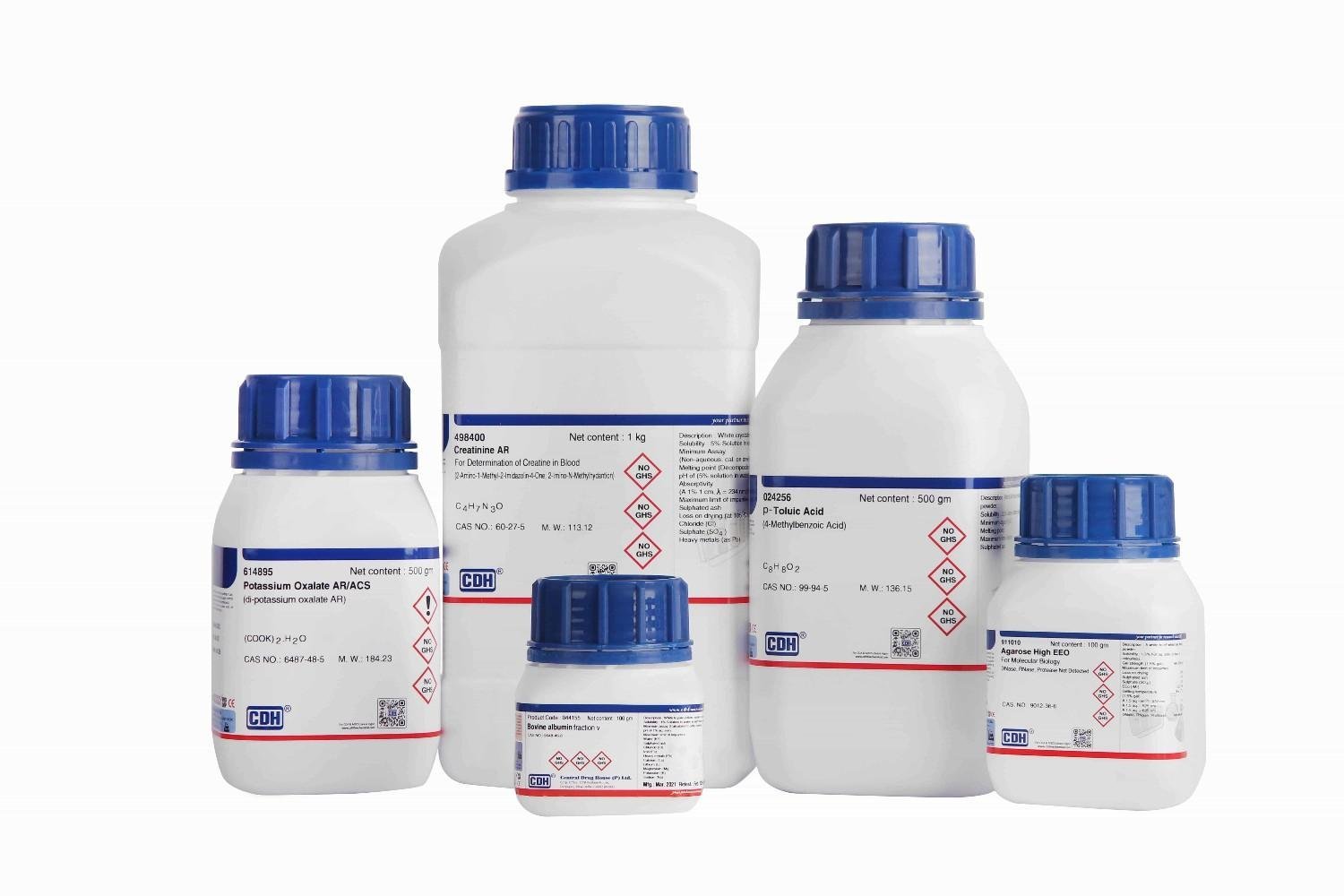
Description
Specifications Table
| Product Name | Polyethylene HDPE | 193305 | CDH |
|---|---|
| Pack Size | 1kg |
| Form | Granules |
| Grade | Lab Grade |
| Application | Chemical storage, lab bottles, containers |
Product Description
Polyethylene HDPE (High-Density Polyethylene) is a versatile, lab-grade polymer widely used in scientific and industrial applications. Known for its exceptional chemical resistance and durability, this HDPE variant is perfect for manufacturing lab bottles, containers, and storage solutions. Whether you’re handling corrosive chemicals or need reliable packaging for research, this 1kg pack ensures you have the right material for the job.
HDPE is favored in laboratories because it doesn’t react with most acids, bases, or solvents, making it a safe choice for storing sensitive substances. Its high-density structure also provides superior strength, reducing the risk of leaks or breakage. Researchers, students, and educators trust HDPE for its consistency and reliability in demanding environments.
At eqipped, we source premium-grade HDPE to meet the strict quality standards required in lab settings. This product is ideal for creating custom labware or replacing worn-out containers. Need chemical-resistant bottles for your lab? Order this HDPE today and ensure safe, long-lasting storage.
From academic projects to professional research, HDPE bottles and containers are a staple in any well-equipped lab. This 1kg pack gives you the flexibility to mold or shape the material as needed, whether you’re designing new storage solutions or reinforcing existing ones. Its inert nature also makes it suitable for food-grade applications, adding to its versatility.
When you buy Polyethylene HDPE online from eqipped, you’re investing in a product that combines affordability with high performance. No compromises—just dependable lab supplies delivered to your doorstep.
FAQs
What is the difference between HDPE and LDPE?
HDPE (High-Density Polyethylene) is denser and more rigid, making it ideal for bottles and containers. LDPE (Low-Density Polyethylene) is more flexible and used for bags or films.
Can HDPE bottles be autoclaved?
Yes, HDPE can withstand autoclaving, making it suitable for sterile lab applications. However, check the specific temperature limits for your product.
Is this HDPE food-grade?
This lab-grade HDPE is not certified for food contact. For food applications, ensure you use FDA-approved HDPE.
How do I store chemicals in HDPE bottles?
Ensure the bottle is clean and dry before filling. Use compatible closures and label the container with the chemical name and hazards.
Can I recycle HDPE lab bottles?
Yes, HDPE is widely recyclable. Check local guidelines for proper disposal or recycling methods.