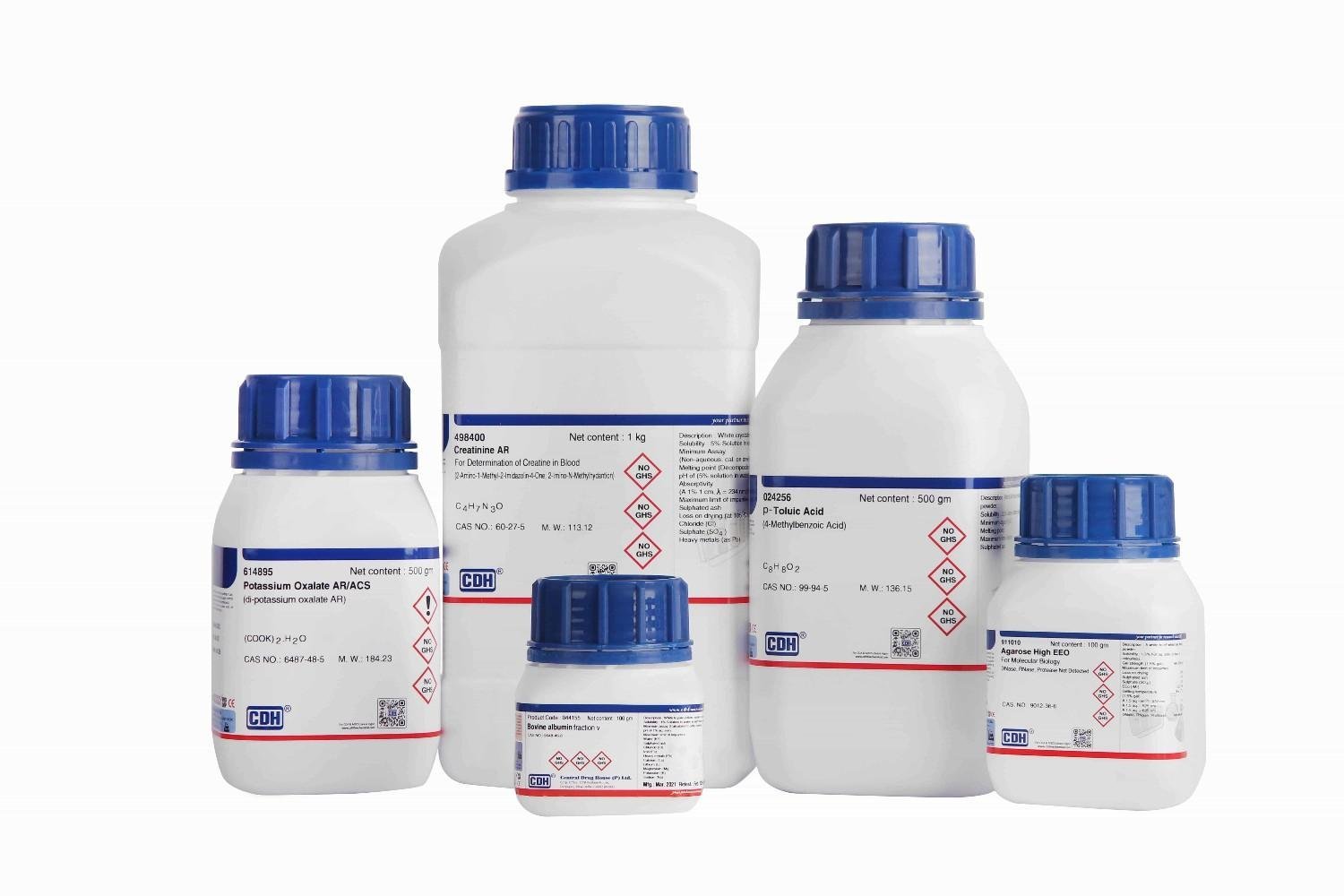
Description
Specifications Table
| Product Name | b-Propiolactone 97.0% | TC1223 | CDH |
|---|---|
| Quantity/Pack Size | 100g |
| Form | Liquid |
| Grade | Laboratory Grade |
| Application | Chemical synthesis, research, and industrial applications |
Product Description
b-Propiolactone 97.0% is a high-purity chemical compound widely used in research laboratories and industrial applications. Known for its reactivity and versatility, it serves as a key intermediate in organic synthesis, polymer production, and pharmaceutical research. Whether you’re a student working on a project or a researcher developing new compounds, this lab-grade b-Propiolactone ensures consistent results.
At eqipped, we understand the importance of quality reagents in scientific work. That’s why we source our chemicals from trusted suppliers to guarantee purity and reliability. If you’re looking to buy b-Propiolactone online, our platform offers a seamless purchasing experience with competitive pricing and fast shipping across India.
Need high-purity b-Propiolactone for your lab? Order now and get it delivered to your doorstep!
b-Propiolactone is particularly valued for its role in esterification reactions, lactone ring openings, and as a building block in pharmaceutical synthesis. Its high purity (97.0%) minimizes impurities, making it ideal for sensitive applications where precision matters. Researchers in academia and industry rely on this compound for its stability and performance in controlled environments.
When handling b-Propiolactone, always follow standard lab safety protocols. Store it in a cool, dry place away from direct sunlight and incompatible substances. For best results, use it within the recommended shelf life to maintain its efficacy.
FAQs
What is the purity of b-Propiolactone available at eqipped?
Our b-Propiolactone has a minimum purity of 97.0%, making it suitable for high-precision laboratory and research applications.
Can I use b-Propiolactone for pharmaceutical synthesis?
Yes, its high purity and reactivity make it a common choice in pharmaceutical research for creating intermediate compounds.
How should I store b-Propiolactone to maintain its stability?
Store it in a tightly sealed container in a cool, dry place, away from direct sunlight and incompatible substances like strong acids or oxidizing agents.
Is b-Propiolactone available in bulk quantities?
Currently, we offer it in a 100g pack size. For bulk requirements, please contact our support team for assistance.
What safety precautions should I take while handling b-Propiolactone?
Wear PPE (gloves, goggles, lab coat), work in a fume hood, and avoid inhalation or skin contact. Follow standard lab safety protocols for hazardous chemicals.