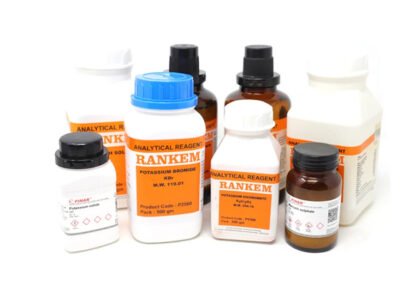
Description
Specifications Table
| Product Name | 1-Heptanesulfonic acid sodium salt, monohydrate HPLC |
|---|---|
| Quantity/Pack Size | 25 g |
| Form | Solid |
| Grade | HPLC |
| Application | Ion pair reagent for HPLC, reverse-phase chromatography |
Product Description
1-Heptanesulfonic acid sodium salt monohydrate is a high-purity ion pair reagent widely used in HPLC applications. This HPLC-grade chemical ensures reliable performance in ion pair chromatography, making it essential for laboratories analyzing ionic compounds. Whether you’re a student, researcher, or educator, this reagent helps achieve precise separations in reverse-phase HPLC.
At eqipped, we provide lab-grade chemicals that meet stringent quality standards. This product is ideal for academic research, pharmaceutical analysis, and environmental testing. The monohydrate form ensures stability, while the sodium salt enhances solubility in aqueous mobile phases.
Need a reliable ion pair reagent for your HPLC experiments? Buy 1-Heptanesulfonic acid sodium salt online today for accurate results.
FAQs
What is 1-Heptanesulfonic acid sodium salt used for?
It is primarily used as an ion pair reagent in HPLC to improve the separation of ionic compounds.
Is this product suitable for reverse-phase HPLC?
Yes, it is specifically designed for reverse-phase HPLC applications.
What is the grade of this chemical?
This is an HPLC-grade chemical, ensuring high purity for analytical use.
How should I store this product?
Store in a tightly sealed container at room temperature, away from moisture.
Can I buy this product in bulk?
Yes, eqipped offers bulk quantities for research and institutional needs.