Description
Specifications Table
| Product Name | Aluminum Ammonium Sulfate LR |
|---|---|
| Quantity/Pack Size | 500 g |
| Form | Crystalline Powder |
| Grade | LR (Laboratory Reagent) |
| Application | Analytical chemistry, crystallization, educational labs |
Product Description
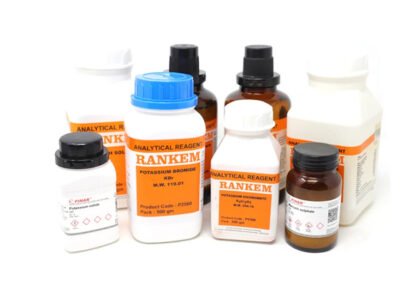
Aluminum ammonium sulfate, also known as ammonium alum, is a versatile laboratory reagent widely used in research, education, and industrial applications. This LR-grade chemical from Avantor (RANKA0230) ensures high purity and consistency, making it ideal for precise analytical work, crystallization processes, and educational experiments.
Whether you’re a student setting up a chemistry project or a researcher conducting advanced analyses, this aluminum ammonium sulfate delivers reliable performance. Its stable crystalline form dissolves easily in water, providing clear solutions for titrations, precipitation reactions, and other lab procedures.
At eqipped, we understand the importance of quality reagents in scientific work. That’s why we source this product from trusted suppliers like Avantor, ensuring you receive a product that meets stringent laboratory standards. The 500g pack size offers excellent value for both small-scale and bulk requirements.
Need high-purity aluminum ammonium sulfate for your lab? Buy online now at eqipped for guaranteed quality and fast shipping.
This chemical finds applications in various fields:
- As a mordant in dyeing processes
- In water purification systems
- For flame retardant preparations
- In the manufacture of other aluminum compounds
For educational institutions, this reagent serves as an excellent teaching aid for demonstrating double salt formation and crystallization principles. Researchers appreciate its consistency in analytical procedures where precise results are crucial.
Safety and Handling
While aluminum ammonium sulfate is generally considered low hazard, proper laboratory safety practices should always be followed:
- Wear appropriate PPE (gloves, goggles, lab coat)
- Work in a well-ventilated area
- Avoid inhalation of dust
- Store in a cool, dry place away from incompatible substances
Why This Product Stands Out
The LR grade designation indicates this product meets laboratory reagent specifications, offering better purity than technical grades. Avantor’s manufacturing processes ensure batch-to-batch consistency, which is vital for reproducible experimental results. The 500g packaging provides an optimal balance between quantity and freshness, reducing the risk of contamination from repeated opening of larger containers.
When you buy aluminum ammonium sulfate from eqipped, you’re not just purchasing a chemical – you’re investing in reliable results for your scientific work. Our streamlined ordering process and nationwide delivery network make it easy to get the supplies you need when you need them.
FAQs
What is the shelf life of aluminum ammonium sulfate LR?
When stored properly in a sealed container at room temperature, aluminum ammonium sulfate LR maintains its stability for at least 2 years from the date of manufacture.
Can this product be used for food applications?
No, this LR grade aluminum ammonium sulfate is intended solely for laboratory use and is not food-grade certified. For food applications, you would need a different, food-grade specification.
What is the solubility of aluminum ammonium sulfate in water?
Aluminum ammonium sulfate is highly soluble in water, with approximately 150g dissolving in 1 liter of water at 20°C. The solubility increases with temperature.
How should I dispose of unused aluminum ammonium sulfate?
Follow your institution’s chemical waste disposal protocols. Typically, small quantities can be neutralized and disposed of with excess water, but larger amounts may require special handling as chemical waste.
Is this the same as potassium alum?
No, while both are types of alum, aluminum ammonium sulfate (ammonium alum) has different properties and applications compared to potassium alum (potassium aluminum sulfate).