Description
Specifications Table
| Product Name | Ammonium Cerric Sulfate Dihydrate LR |
|---|---|
| Quantity/Pack Size | 100 g |
| Form | Crystalline Powder |
| Grade | LR (Laboratory Reagent) |
| Application | Redox titrations, analytical chemistry, cerimetric titrations |
Product Description
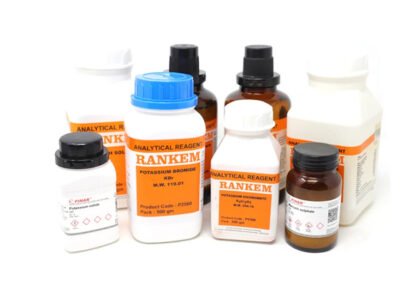
Ammonium Cerric Sulfate Dihydrate LR is a highly reliable laboratory reagent widely used in redox titrations and analytical chemistry. This LR-grade chemical from Avantor (RANKA2625) ensures consistent performance in cerimetric titrations, making it a staple in research labs, educational institutions, and quality control setups.
Whether you’re a student conducting experiments or a researcher validating analytical methods, this compound delivers precise results. Its stability and solubility in water make it easy to prepare standard solutions for titrations involving iron, arsenic, and other analytes.
At eqipped, we understand the importance of quality reagents in your work. That’s why we source this product from trusted suppliers like Avantor, ensuring you get a product that meets rigorous laboratory standards.
Key Applications
This versatile reagent finds use in:
- Cerimetric titrations for determining reducing agents
- Quantitative analysis in research and industrial labs
- Educational demonstrations of redox reactions
- Standardization of solutions in analytical chemistry
For accurate results, always use freshly prepared solutions and follow standard laboratory protocols. Store the chemical in a tightly sealed container to prevent moisture absorption.
Why This Grade Matters
LR (Laboratory Reagent) grade chemicals are purified to meet strict specifications, ensuring minimal impurities that could interfere with your experiments. Unlike technical grades, LR-grade Ammonium Cerric Sulfate Dihydrate provides the reliability needed for sensitive analytical procedures.
If you’re looking to buy ammonium cerric sulfate online, eqipped offers a seamless purchasing experience with fast shipping across India. Our platform is trusted by students, educators, and researchers for high-quality lab supplies.
Handling and Storage Tips
To maintain the integrity of your reagent:
- Store in a cool, dry place away from direct sunlight
- Keep the container tightly closed when not in use
- Avoid exposure to moisture or incompatible chemicals
- Use in a well-ventilated area or under a fume hood
Always refer to the Safety Data Sheet (SDS) for detailed handling instructions and first-aid measures.
FAQs
What is the shelf life of Ammonium Cerric Sulfate Dihydrate LR?
When stored properly in a sealed container, this reagent typically has a shelf life of 2-3 years. Always check the manufacturer’s expiry date on the label.
Can this be used for cerimetric titrations?
Yes, this LR-grade compound is specifically designed for cerimetric titrations, offering reliable and reproducible results in redox reactions.
Is this product suitable for educational labs?
Absolutely. Many universities and colleges use this reagent for teaching redox chemistry and analytical techniques due to its consistency and safety profile.
How do I prepare a standard solution?
Dissolve the required amount in distilled water, typically 0.1N or 0.01N concentrations, and standardize against a primary standard like sodium oxalate.
Where can I buy ammonium cerric sulfate online in India?
You can purchase LR-grade Ammonium Cerric Sulfate Dihydrate from eqipped, a trusted supplier of lab chemicals with pan-India delivery.