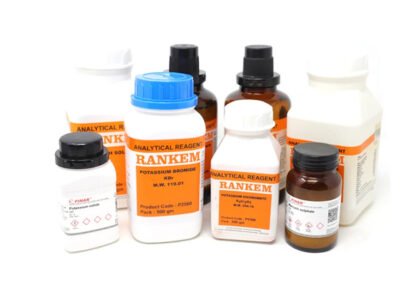
Description
Specifications Table
| Product Name | Barium sulfate LR | RANKB0062 | Avantor |
|---|---|
| Pack Size | 2 kg |
| Form | Powder |
| Grade | LR (Laboratory Reagent) |
| Application | X-ray imaging, diagnostics, lab research |
Product Description
Barium sulfate LR is a versatile, high-purity chemical widely used in laboratories and medical diagnostics. This 2 kg pack from Avantor ensures consistent quality for applications like X-ray contrast imaging, radiopaque agents, and analytical testing. Its insolubility in water makes it safe for internal medical use while providing excellent opacity under X-rays.
For researchers and educators, this lab-grade barium sulfate is ideal for preparing standards, calibrating equipment, or conducting experiments requiring a stable, non-reactive compound. The LR grade guarantees minimal impurities, ensuring reliable results in critical applications.
Whether you’re a student setting up a chemistry project or a professional running diagnostic tests, eqipped provides authentic Avantor products with fast shipping across India. Need bulk quantities or custom packaging? Contact eqipped for tailored solutions.
FAQs
What is the shelf life of barium sulfate LR?
When stored properly in a sealed container, it remains stable for 2-3 years.
Can this be used for medical X-rays?
Yes, LR grade is suitable for diagnostic imaging when prepared under sterile conditions.
Is this product soluble in water?
No, barium sulfate is highly insoluble, which makes it safe for internal medical use.
What’s the difference between LR and AR grades?
LR (Laboratory Reagent) is pure enough for most lab work, while AR (Analytical Reagent) has stricter purity standards for sensitive tests.
How quickly can I get delivery in India?
eqipped ships across India with 3-5 business days delivery for most locations.