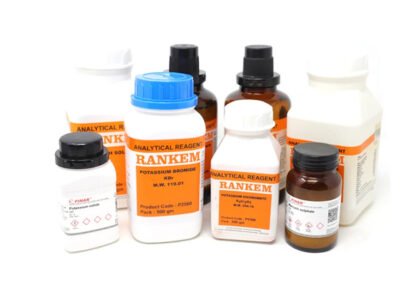
Description
Specifications Table
| Product Name | Lead acetate, trihydrate LR | RANKL0020 | Avantor |
|---|---|
| Quantity/Pack Size | 500 g |
| Form | Crystalline powder |
| Grade | LR (Laboratory Reagent) |
| Application | Qualitative analysis, precipitation reactions, research |
Product Description
Lead acetate trihydrate is a versatile laboratory reagent widely used in analytical chemistry and research. This LR-grade compound ensures high purity, making it suitable for precise applications such as qualitative inorganic analysis, precipitation of proteins, and synthesis of lead-based compounds. Researchers and educators rely on its consistent performance in experiments requiring lead ions.
Whether you’re setting up a chemistry lab or conducting advanced research, this product delivers reliable results. The trihydrate form ensures stability, while the LR grade meets stringent quality standards for laboratory use. For those looking to buy lead acetate trihydrate online, eqipped offers a trusted source with prompt delivery across India.
Lead acetate trihydrate is also employed in histological staining and as a reagent in sugar analysis. Its solubility in water and distinct crystalline structure make it easy to handle in controlled lab environments. If you’re searching for lead acetate trihydrate suppliers or comparing lead acetate trihydrate price options, this product provides excellent value without compromising quality.
Key Applications
This compound is commonly used in:
- Qualitative analysis of inorganic ions
- Precipitation reactions in analytical chemistry
- Protein precipitation in biochemistry
- Synthesis of lead-based compounds
- Histological staining procedures
Safety and Handling
Lead acetate trihydrate is toxic if ingested or inhaled. Always handle with appropriate personal protective equipment (PPE), including gloves and goggles. Store in a cool, dry place away from incompatible substances. Dispose of waste according to local regulations for hazardous chemicals.
FAQs
What is the purity level of this lead acetate trihydrate?
This product meets LR (Laboratory Reagent) grade standards, ensuring high purity for reliable lab results.
Can this be used for educational lab experiments?
Yes, it is suitable for educational purposes, including qualitative analysis and precipitation demonstrations.
How should I store lead acetate trihydrate?
Store in a tightly sealed container in a cool, dry place, away from moisture and incompatible chemicals.
Is this product available in smaller quantities?
Currently, it is available in a 500 g pack. For bulk requirements, contact eqipped for customized options.
What precautions should I take while handling this chemical?
Wear gloves, goggles, and a lab coat. Avoid inhalation and skin contact. Work in a well-ventilated area or fume hood.