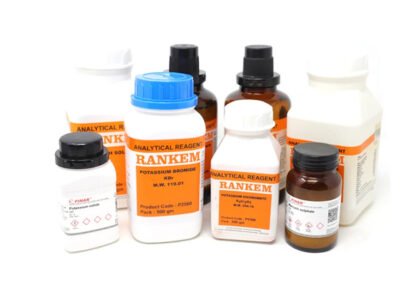
Description
Specifications Table
| Product Name | Propan-1-ol (n-propyl alcohol) AR |
|---|---|
| Pack Size | 500 ml |
| Form | Liquid |
| Grade | AR (Analytical Reagent) |
| Application | Laboratory solvent, synthesis, chromatography |
Product Description
Propan-1-ol, commonly known as n-propyl alcohol, is a high-purity AR grade solvent widely used in laboratories across India. This clear, colorless liquid is an essential reagent for research, synthesis, and analytical procedures. Whether you’re a student working on a chemistry project or a researcher conducting advanced experiments, this propanol variant ensures reliable results with minimal impurities.
As an AR grade chemical, it meets stringent quality standards, making it suitable for critical applications like chromatography, extraction processes, and as a cleaning agent for lab equipment. The 500 ml pack size offers convenience for both small-scale and bulk usage, ensuring you have an adequate supply for your experiments.
When you buy n-propyl alcohol from eqipped, you get a product that balances purity and affordability. Our supply chain ensures timely delivery, so you can focus on your work without worrying about stock shortages. For researchers and educators, this propanol variant is a staple in organic chemistry labs due to its versatility and consistent performance.
Looking for a trusted n-propyl alcohol supplier? eqipped provides lab-grade chemicals with detailed specifications, so you know exactly what you’re purchasing. The AR grade designation guarantees low levels of contaminants, which is crucial for sensitive experiments. Whether you’re extracting compounds or preparing samples, this propanol delivers the precision you need.
Need high-quality propan-1-ol for your lab? Order now and experience seamless procurement with eqipped.
FAQs
What is the difference between n-propyl alcohol and isopropyl alcohol?
N-propyl alcohol (propan-1-ol) has its hydroxyl group on the end carbon, while isopropyl alcohol (propan-2-ol) has it on the middle carbon. This structural difference affects their properties n-propyl alcohol is less volatile and has a slightly higher boiling point.
Can I use this propanol for DNA extraction?
Yes, AR grade propan-1-ol is suitable for DNA extraction protocols. Its high purity ensures it won’t interfere with the nucleic acid precipitation process.
What’s the shelf life of this product?
When stored properly in its original container, this propanol has a shelf life of at least 2 years. Always check the bottle for the manufacturer’s expiration date.
Is this product suitable for HPLC applications?
Absolutely. The AR grade designation means it’s been purified to remove UV-absorbing impurities, making it ideal for HPLC mobile phases.
How should I store this chemical?
Store in a cool, dry place away from heat sources and direct sunlight. Keep the bottle tightly sealed when not in use to prevent evaporation and contamination.