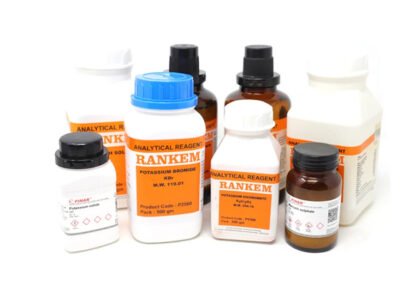
Description
Specifications Table
| Product Name | Tartaric Acid ARS, ACS | RANKT2011 | Avantor |
|---|---|
| Pack Size | 500g, 1kg, 5kg |
| Form | Crystalline Powder |
| Grade | ARS, ACS |
| Application | Titrations, Chiral Separations, Food & Beverage Analysis |
Product Description
Tartaric Acid ARS, ACS is a high-purity chemical compound widely used in laboratories for analytical and research purposes. Sourced from Avantor, this ACS-grade acid ensures reliability in titrations, chiral resolutions, and food chemistry applications. Its crystalline form guarantees consistent results, making it a staple in academic and industrial labs across India.
Whether you’re a student conducting experiments or a researcher requiring precise reagents, this tartaric acid meets stringent quality standards. The ARS (Analytical Reagent Grade) and ACS (American Chemical Society) certifications confirm its suitability for critical lab work. For those looking to buy tartaric acid online, eqipped offers competitive pricing and swift delivery.
Common uses include pH adjustment, wine analysis, and as a resolving agent for enantiomers. Its solubility in water and stability under standard conditions make it versatile for various protocols. Researchers in pharmaceuticals, food science, and organic synthesis often rely on this grade for accurate, reproducible outcomes.
FAQs
What is the shelf life of Tartaric Acid ARS, ACS?
When stored properly in a sealed container, it remains stable for 2–3 years.
Can this be used in food-grade applications?
Yes, the ACS grade meets purity standards for food analysis, though it’s primarily sold for lab use.
Is this product suitable for HPLC analysis?
Absolutely. Its high purity makes it ideal for chromatographic applications.
What’s the difference between ARS and ACS grades?
ARS is optimized for analytical reagents, while ACS adheres to stricter American Chemical Society standards.
How quickly can I receive my order?
eqipped delivers across India within 3–5 business days. Expedited options are available.
Need Tartaric Acid for your lab? Order now and get authentic Avantor quality at your doorstep.