Description
Specifications Table
| Product Name | Dithizone Analytical Reagent |
|---|---|
| Pack Size | 100g |
| Form | Powder |
| Grade | Analytical Reagent |
| Application | Metal ion detection, spectrophotometry, lab research |
Product Description
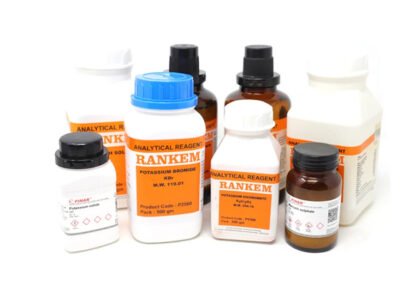
Dithizone Analytical Reagent is a highly sensitive chelating agent used in laboratories for detecting and quantifying metal ions like lead, zinc, and mercury. Known for its sharp colorimetric reactions, this reagent is essential in analytical chemistry, environmental testing, and research applications. Whether you’re a student setting up experiments or a researcher validating results, this high-purity dithizone ensures accurate and reliable outcomes.
At eqipped, we source this reagent from Avantor, a trusted name in lab supplies, guaranteeing consistency and purity. The powder form allows for easy dissolution and customization based on your protocol requirements. From educational labs to advanced research facilities, this reagent is a staple for precise metal analysis.
Need a reliable dithizone supplier for your lab? Buy Dithizone Analytical Reagent online today for seamless delivery.
Applications of Dithizone Analytical Reagent
This versatile reagent is widely used in:
- Environmental testing for heavy metal contamination
- Pharmaceutical quality control
- Academic experiments in chemistry and biochemistry
- Industrial process monitoring
Why This Reagent Stands Out
Unlike generic alternatives, this dithizone reagent offers exceptional sensitivity and stability. Its analytical grade ensures minimal interference in assays, making it ideal for trace metal analysis. Researchers appreciate its consistent performance, while educators rely on it for clear, reproducible results in student labs.
Looking for dithizone reagent price in India? eqipped offers competitive rates without compromising quality.
Safety and Handling
Dithizone is a hazardous chemical. Always handle with care:
- Wear appropriate PPE (gloves, goggles, lab coat)
- Use in a well-ventilated area or fume hood
- Avoid inhalation or skin contact
- Store in a cool, dry place away from oxidizing agents
FAQs
What is dithizone used for in labs?
Dithizone is primarily used as a chelating agent to detect and quantify metal ions like lead, zinc, and mercury through colorimetric methods.
How do I prepare a dithizone solution?
Dissolve the powder in a suitable solvent (e.g., chloroform or carbon tetrachloride) as per your protocol. Always follow lab safety guidelines.
Is this reagent suitable for educational labs?
Yes, its high purity and reliable performance make it ideal for academic experiments in chemistry and environmental science.
What is the shelf life of dithizone reagent?
When stored properly in a cool, dry place, it remains stable for up to 2 years. Check the label for the exact expiry date.
Can I buy dithizone online in small quantities?
Yes, eqipped offers flexible pack sizes to meet your lab’s needs, from small-scale research to bulk orders.