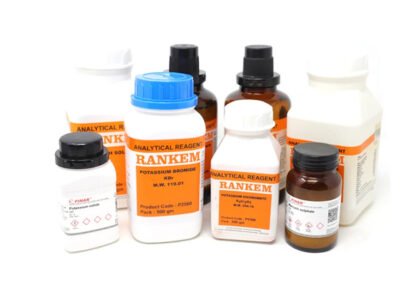
Description
Specifications Table
| Product Name | Praseodymium, 10000 ppm ICP single-element standard |
|---|---|
| Pack Size | 100 ml |
| Form | Liquid (aqueous solution) |
| Grade | ICP standard (traceable to NIST) |
| Application | ICP-OES, ICP-AES, atomic spectroscopy |
Product Description
When precision matters in your lab, the right standards make all the difference. This praseodymium 10000 ppm ICP single-element standard from Avantor is designed for researchers and analysts who demand accuracy in trace elemental analysis. Whether you’re calibrating instruments, validating methods, or conducting routine quality checks, this high-purity solution ensures reliable results every time.
The standard is prepared in a stable matrix, minimizing interference and maximizing sensitivity for ICP-OES and ICP-AES applications. With a concentration of 10000 ppm, it offers the flexibility to create working standards through simple dilution, saving you time and reducing errors in sample preparation.
What sets this praseodymium standard apart is its traceability to NIST reference materials, giving you confidence in your data. It’s an essential tool for laboratories working with rare earth elements, whether in academic research, environmental testing, or industrial quality control.
For labs that refuse to compromise on accuracy, this praseodymium ICP standard delivers consistent performance. Order yours today and experience the difference precision makes.
Why This Standard Matters in Your Lab
Praseodymium analysis isn’t just about detecting the element—it’s about quantifying it with confidence. In fields like materials science, where rare earth elements play a critical role in alloys and magnets, having a reliable standard is non-negotiable. This solution helps you:
- Achieve lower detection limits with minimal background interference
- Maintain instrument calibration over extended periods
- Validate analytical methods for regulatory compliance
- Ensure batch-to-batch consistency in manufacturing processes
The 100 ml pack size is ideal for laboratories with moderate throughput, providing enough volume for multiple analyses while minimizing waste. Each bottle is sealed to prevent contamination, with clear labeling for easy identification in your lab inventory.
Applications Across Industries
This praseodymium standard finds use in diverse applications where precise rare earth element quantification is required:
Academic Research: Students and researchers studying lanthanide chemistry or developing new materials rely on accurate standards to validate their findings. Whether you’re characterizing catalysts or exploring magnetic properties, this standard ensures your data is publication-ready.
Environmental Testing: With increasing concerns about rare earth element contamination, environmental labs use this standard to analyze soil, water, and sediment samples with confidence.
Industrial Quality Control: Manufacturers of specialty alloys, glass, and ceramics depend on precise praseodymium measurements to maintain product specifications. This standard helps them meet stringent quality requirements.
Pharmaceutical Analysis: In drug development, where trace elements can affect product stability, this standard aids in comprehensive elemental impurity testing.
Handling and Storage Recommendations
To maintain the integrity of your praseodymium standard:
Store the unopened bottle at room temperature (15–25°C) away from direct sunlight. Once opened, tightly recap after each use to prevent evaporation or contamination. For long-term storage, consider aliquoting the solution into smaller, airtight containers to minimize exposure to air.
Always use clean, dedicated pipettes or dispensers to avoid cross-contamination. The solution is stable for at least 12 months when stored properly, but we recommend verifying the concentration periodically if used for critical applications.
Safety Considerations
While praseodymium in this form is relatively low in toxicity, standard laboratory safety practices should be followed. Wear appropriate personal protective equipment (PPE) including gloves and safety glasses when handling. In case of skin contact, wash thoroughly with soap and water. For eye contact, rinse immediately with plenty of water and seek medical advice if irritation persists.
The solution contains nitric acid as a stabilizer. Avoid inhalation of vapors and work in a well-ventilated area or under a fume hood when handling large volumes.
FAQs
What is the shelf life of this praseodymium ICP standard?
When stored unopened at room temperature, this standard maintains its specified concentration for at least 12 months. After opening, we recommend using it within 6 months for optimal accuracy, though proper storage can extend this period.
Can I use this standard for both ICP-OES and ICP-MS?
While primarily designed for ICP-OES/AES applications, this 10000 ppm standard can be diluted appropriately for ICP-MS use. However, you may need to account for potential matrix effects when using it for mass spectrometry.
How should I prepare working standards from this solution?
For most applications, serial dilution with 2% nitric acid works well. For example, to prepare a 100 ppm working standard, dilute 1 ml of this solution to 100 ml with 2% HNO3. Always use class A volumetric glassware for precise dilutions.
Is this standard traceable to NIST reference materials?
Yes, this praseodymium standard is manufactured with traceability to NIST reference materials, ensuring the concentration is accurate and reliable for your analytical needs.
What’s the difference between this and multi-element standards?
Single-element standards like this one offer higher purity and fewer potential interferences compared to multi-element standards. They’re ideal when you need to analyze praseodymium specifically or when creating custom multi-element mixes for your specific application.