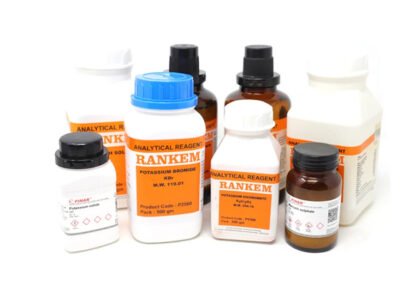
Description
Specifications Table
| Product Name | Sodium thiosulfate, anhydrous GPR RECTAPUR™ |
|---|---|
| Pack Size | 250 g |
| Form | Powder |
| Grade | GPR (General Purpose Reagent) |
| Application | Titration, iodometry, analytical chemistry |
Product Description
Sodium thiosulfate, anhydrous GPR RECTAPUR™ is a high-quality chemical designed for precise laboratory applications. This anhydrous form ensures stability and accuracy in analytical procedures, making it ideal for titration, iodometry, and other quantitative analyses.
With a GPR grade certification, this product meets stringent purity standards, minimizing impurities that could interfere with experimental results. Researchers and students alike rely on its consistency for reproducible data in academic and industrial settings.
Whether you’re conducting volumetric analysis or preparing standard solutions, this sodium thiosulfate delivers dependable performance. Its fine powder form dissolves easily, ensuring uniform distribution in aqueous solutions.
For those looking to buy sodium thiosulfate online, eqipped offers a seamless purchasing experience with verified authenticity and prompt delivery across India.
FAQs
What is the shelf life of anhydrous sodium thiosulfate?
When stored properly in a sealed container, it remains stable for up to 2 years. Always check the expiration date on the label.
Can this be used for iodometric titrations?
Yes, its high purity makes it ideal for iodometric titrations where accurate results are critical.
Is this product suitable for educational labs?
Absolutely. Many universities and colleges use this grade for student experiments due to its reliability.
How should I dispose of unused sodium thiosulfate?
Follow local regulations for chemical disposal. Neutralize if required before disposal in designated waste containers.
Does eqipped provide bulk discounts for this product?
Yes, contact our sales team for bulk pricing options tailored to your requirements.