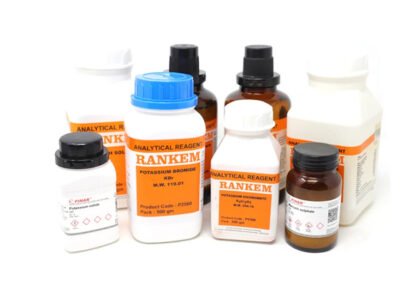
Description
Specifications Table
| Product Name | Tin, 10 ppm ICP-ML, single-element standard | VWRC85630.180 | Avantor |
|---|---|
| Quantity/Pack Size | 100 ml |
| Form | Liquid |
| Grade | ICP-ML |
| Application | Trace metal analysis via ICP-OES and ICP-MS |
Product Description
When precision matters in your lab, the Tin 10 ppm ICP-ML single-element standard from Avantor ensures reliable results. This high-purity solution is specifically formulated for inductively coupled plasma (ICP) techniques, making it indispensable for researchers, students, and educators conducting trace metal analysis.
Whether you’re calibrating instruments, validating methods, or performing routine testing, this standard delivers consistent accuracy. The 10 ppm concentration is ideal for sensitive applications where even minor deviations can impact outcomes. Buy Tin ICP standard online from eqipped and experience seamless procurement with lab-grade quality you can trust.
Designed for compatibility with ICP-OES and ICP-MS systems, this single-element standard minimizes interference, ensuring clean spectra and dependable data. The 100 ml pack size offers ample volume for repeated use without frequent reordering, making it a cost-effective choice for busy laboratories.
For educational institutions, this standard serves as an excellent teaching tool, helping students understand calibration curves and instrumental analysis. Researchers will appreciate its stability and traceability, which are critical for publishing reproducible results.
Need a reliable Tin standard for your next experiment? Order now and get it delivered to your lab doorstep.
FAQs
What is the shelf life of this Tin ICP standard?
When stored properly in its original container, this standard maintains stability for 24 months from the date of manufacture.
Can I use this for both ICP-OES and ICP-MS?
Yes, this 10 ppm Tin standard is suitable for both techniques, though you may need to dilute it further for ICP-MS applications depending on your instrument’s sensitivity.
How should I prepare working standards from this solution?
Use serial dilution with appropriate matrix-matched solutions. Always use Class A volumetric glassware and high-purity diluents to maintain accuracy.
Is this standard compatible with organic matrices?
This aqueous standard works best with water-based samples. For organic matrices, you may need to consider alternative preparation methods or matrix-matched standards.
What documentation comes with this product?
Each bottle includes a Certificate of Analysis with concentration values, expiration date, and storage conditions. Safety Data Sheets are available upon request.