Description
Specifications Table
| Product Name | Ionization Potential of Mercury using Thyratron Valve 2D21 / 2051 | AE 204 | ASICO |
|---|---|
| Pack Size | 1 Kit |
| Form | Experimental Setup |
| Grade | Educational/Lab Grade |
| Application | Physics experiments, ionization studies, educational labs |
Product Description
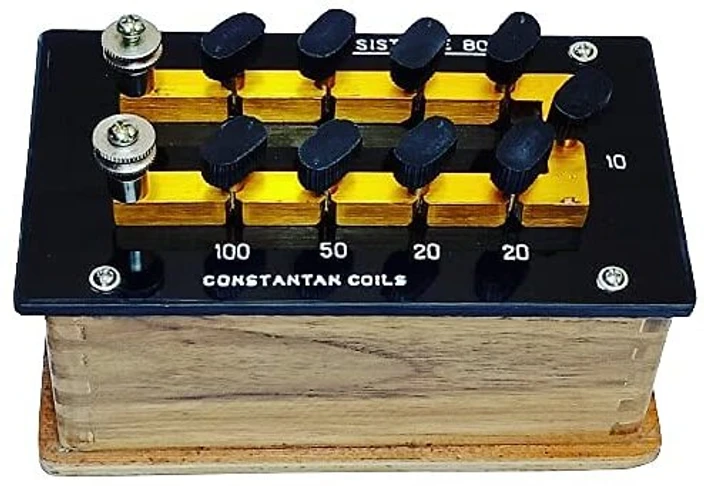
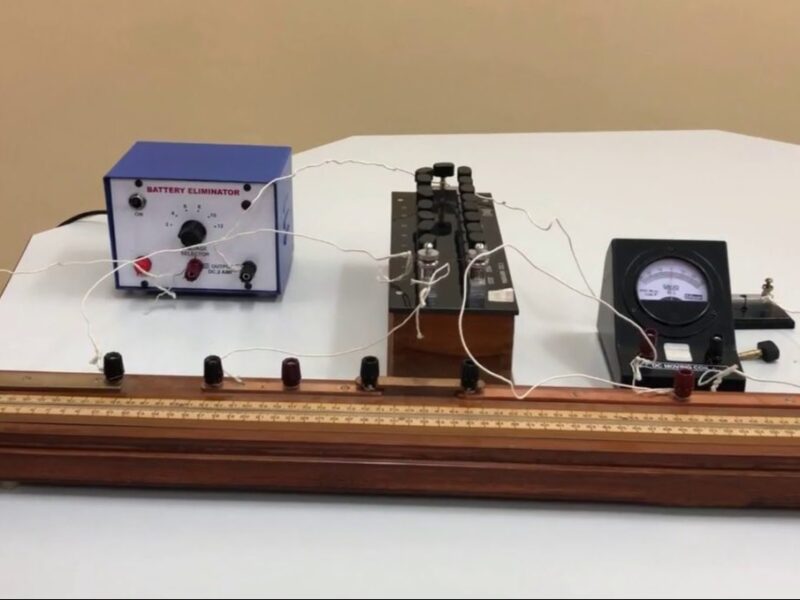
The Ionization Potential of Mercury using Thyratron Valve 2D21 / 2051 is a specialized kit designed for students and researchers to study the ionization properties of mercury. This setup includes the Thyratron Valve 2D21, a critical component for accurate measurements in physics experiments. Whether you’re conducting educational lab work or advanced research, this kit provides the tools needed for precise ionization studies.
Mercury ionization experiments are fundamental in understanding atomic structure and energy levels. The Thyratron Valve 2D21 ensures reliable performance, making it a preferred choice for educational institutions. With eqipped, you get a complete solution for your lab needs, delivered with quality and convenience.
Ready to explore mercury ionization? Buy the Thyratron Valve 2D21 kit online at eqipped and elevate your lab experiments.
FAQs
What is the ionization potential of mercury?
The ionization potential of mercury is approximately 10.43 eV. This kit helps you measure it experimentally using the Thyratron Valve 2D21.
Is the Thyratron Valve 2D21 included in the kit?
Yes, the kit includes the Thyratron Valve 2D21 along with necessary components for the experiment.
Can this kit be used for educational purposes?
Absolutely. It is designed for physics labs in schools, colleges, and universities to teach ionization concepts.
Where can I buy the mercury ionization experiment kit?
You can buy the Ionization Potential of Mercury kit online at eqipped. Order now for fast delivery.
What is the price of the Thyratron Valve 2D21 kit?
The price varies based on configuration. Check the latest 2D21 Thyratron Valve price on eqipped’s product page.