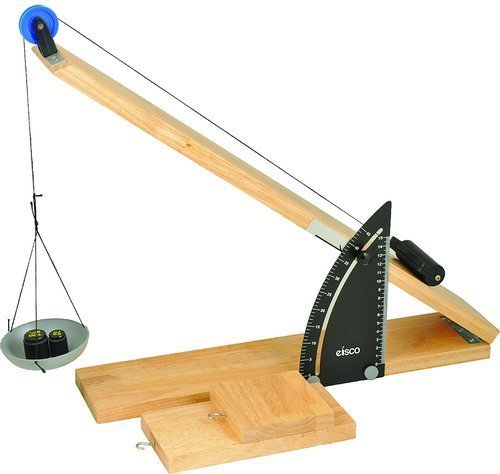
Description
Specifications Table
| Product Name | Photo Cell Characteristics Apparatus Without Wooden Plank & Base |
|---|---|
| Pack Size | 1 Unit |
| Form | Apparatus |
| Grade | Educational/Lab |
| Application | Studying photo cell characteristics in physics labs |
Product Description
The Photo Cell Characteristics Apparatus is an essential tool for physics laboratories, designed to help students and researchers study the behavior of photo cells under varying conditions. This apparatus, model AE 207 by ASICO, is built for precision and durability, ensuring accurate measurements during experiments.
Whether you’re setting up a new lab or upgrading existing equipment, this apparatus provides a reliable way to explore photoelectric effects. The setup is straightforward, allowing users to focus on observations rather than complex assembly. Many educational institutions across India trust this apparatus for its consistency and ease of use.
If you’re looking to buy photo cell apparatus in India, eqipped offers a seamless purchasing experience with fast shipping and quality assurance. This apparatus is particularly useful for demonstrating how light intensity affects photo cell response, making it a valuable addition to any physics curriculum.
Upgrade your lab setup today with the Photo Cell Characteristics Apparatus from eqipped. Shop now for accurate and reliable results!
The apparatus includes all necessary components for conducting experiments, though it does not come with a wooden plank or base, allowing for flexible mounting options. This design choice makes it adaptable to different lab configurations while maintaining stability during use.
For educators, this apparatus serves as an excellent teaching aid, helping students grasp fundamental concepts in optics and electronics. Researchers will appreciate its precision in data collection, which is crucial for publishing accurate findings.
FAQs
What is the purpose of the Photo Cell Characteristics Apparatus?
This apparatus is used to study how photo cells respond to different light intensities, helping students and researchers understand the photoelectric effect.
Does this apparatus come with a wooden base?
No, this model does not include a wooden plank or base, allowing for flexible mounting options in your lab setup.
Is this apparatus suitable for college-level physics labs?
Yes, it is designed for educational use and is commonly found in universities and colleges for physics practicals.
Can I buy this apparatus online in India?
Absolutely! eqipped offers this apparatus with fast shipping across India. Order now for a seamless purchasing experience.
What accessories are included with this apparatus?
The apparatus includes all necessary components for conducting experiments, though additional tools like a power supply may be required separately.