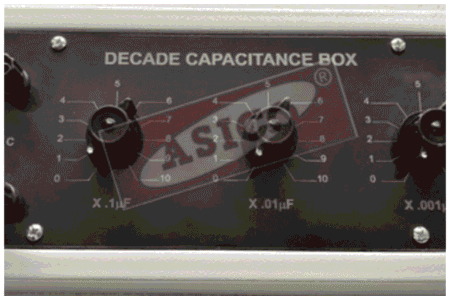
Description
Specifications Table
| Product Name | Anderson Bridge (With Bridge Oscillator & Null Detector) | AE 651B | ASICO |
|---|---|
| Pack Size | 1 Unit |
| Form | Electrical Bridge Circuit with Components |
| Grade | Laboratory/Educational Grade |
| Application | Inductance & Capacitance Measurement, Electrical Engineering Experiments |
Product Description
The Anderson Bridge (AE 651B) is a sophisticated electrical measurement tool designed for precise inductance and capacitance testing in laboratories. Unlike basic bridges, this model includes a built-in bridge oscillator and null detector, eliminating the need for external components and simplifying setup. Whether you’re a student learning circuit theory or a researcher validating component values, this bridge delivers reliable results with minimal calibration.
Engineered by ASICO, this Anderson Bridge setup is widely used in Indian universities and research institutions for its accuracy and ease of use. The integrated oscillator generates the required AC signal, while the null detector helps achieve balance quickly, making it ideal for time-sensitive experiments.
For educators, this bridge serves as an excellent teaching aid to demonstrate AC bridge principles, impedance measurement, and circuit balancing techniques. Researchers appreciate its stability and repeatability when measuring unknown inductors or capacitors in R&D projects.
Need a dependable Anderson Bridge with oscillator for your lab? Shop now at eqipped for genuine ASICO equipment with pan-India delivery.
The compact design ensures it fits easily on lab benches, and the clear labeling of components makes it student-friendly. Unlike digital LCR meters, this analog bridge helps users understand the fundamental physics behind impedance measurement, making it a valuable addition to engineering curricula.
When purchasing laboratory equipment, authenticity matters. eqipped sources this Anderson Bridge directly from ASICO, ensuring you receive a product that meets Indian educational standards. The included manual provides step-by-step operating instructions and sample calculations for common experiments.
FAQs
What is the frequency range of the built-in oscillator?
The oscillator typically operates at 1 kHz, which is optimal for most inductance and capacitance measurements in educational settings.
Can this bridge measure both inductance and capacitance?
Yes, with proper configuration, this Anderson Bridge can measure both unknown inductance and capacitance values by adjusting the circuit connections.
Is this suitable for undergraduate engineering labs?
Absolutely. This is one of the most commonly specified models in Indian engineering colleges for electrical measurement laboratories.
What accessories are included with the bridge?
The standard package includes the bridge unit, connecting wires, instruction manual, and sometimes a sample component for initial testing.
How do I know when the bridge is balanced?
The null detector (either a meter or headphone output) will show minimum deflection or silence when the bridge reaches balance point.