Description
Specifications Table
| Product Name | Acetyl Chloride | 21 | Lancer |
|---|---|
| Quantity/Pack Size | 500 ml |
| Form | Liquid |
| Grade | Laboratory Grade |
| Application | Acylation reactions, organic synthesis, research |
Product Description
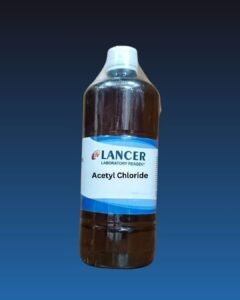
Acetyl Chloride is a versatile laboratory reagent essential for organic synthesis and research applications. This high-purity compound from Lancer offers reliable performance for acylation reactions, making it a staple in chemistry labs across India.
Whether you’re a student working on academic projects or a researcher developing new compounds, this lab-grade Acetyl Chloride delivers consistent results. The 500ml pack size provides ample quantity for multiple experiments while maintaining freshness.
At eqipped, we understand the importance of quality reagents in scientific work. That’s why we source our Acetyl Chloride from trusted manufacturers to ensure you receive a product that meets strict laboratory standards.
Need Acetyl Chloride for your next experiment? Order now and get it delivered to your lab doorstep.
The clear, colorless liquid comes in a secure 500ml bottle designed for safe handling and storage. Always store in a cool, dry place away from moisture and incompatible substances.
For educational institutions and research facilities, this Acetyl Chloride serves as an excellent teaching tool for demonstrating fundamental organic chemistry concepts. Its reactivity makes it particularly useful for illustrating nucleophilic acyl substitution reactions.
When you buy Acetyl Chloride online from eqipped, you’re not just purchasing a chemical – you’re investing in reliable results for your scientific endeavors. Our streamlined ordering process ensures you get what you need when you need it.
Safety Considerations
Acetyl Chloride is highly reactive and corrosive. Always handle with appropriate personal protective equipment including gloves, goggles, and lab coat. Use in a well-ventilated area or fume hood. In case of contact, rinse immediately with plenty of water and seek medical attention.
Common Applications
This laboratory-grade Acetyl Chloride finds use in various scientific applications including:
Preparation of esters and amides through acylation reactions
Synthesis of pharmaceutical intermediates
Research in organic chemistry and material science
Educational demonstrations of nucleophilic substitution
Development of new chemical compounds
Looking for a reliable Acetyl Chloride supplier in India? Your search ends here – shop now at eqipped.
Why This Product Stands Out
The Lancer brand Acetyl Chloride we offer maintains excellent purity levels, ensuring your experiments aren’t compromised by impurities. The 500ml packaging provides an ideal balance between quantity and shelf life, reducing waste while offering enough material for multiple uses.
Our customers across Indian universities and research institutions trust eqipped for their laboratory chemical needs. We’ve built our reputation on providing genuine products that meet the exacting standards of scientific work.
When you purchase from us, you benefit from our deep understanding of the Indian scientific community’s needs. We’ve tailored our product selection and services to support researchers, educators, and students in their important work.
Storage and Handling
For optimal performance and safety, store your Acetyl Chloride in its original container, tightly sealed. Keep away from heat sources and direct sunlight. The ideal storage temperature ranges between 2°C to 8°C.
Always use in a properly equipped laboratory with appropriate safety measures. Never return unused chemical to the original container to prevent contamination.
FAQs
What is Acetyl Chloride used for in laboratories?
Acetyl Chloride serves primarily as an acetylating agent in organic synthesis. It’s commonly used to introduce acetyl groups into molecules, creating esters and amides. Researchers also employ it in the preparation of pharmaceutical intermediates and various organic compounds.
How should I store Acetyl Chloride?
Store Acetyl Chloride in a cool, dry place between 2°C to 8°C. Keep the container tightly sealed and away from moisture, as it reacts violently with water. Always store in a secondary container as an additional safety measure.
What safety precautions should I take when handling Acetyl Chloride?
Always wear appropriate PPE including chemical-resistant gloves, safety goggles, and a lab coat. Work in a fume hood or well-ventilated area. Avoid inhalation and skin contact. Have a spill kit and eye wash station readily available.
Can students use this Acetyl Chloride for university projects?
Yes, this lab-grade Acetyl Chloride is suitable for educational purposes. Many Indian universities use this specific product for undergraduate and postgraduate chemistry practicals. However, students should always work under proper supervision.
How quickly can I receive my order of Acetyl Chloride?
At eqipped, we process orders promptly. Delivery times vary by location, but most customers in major Indian cities receive their Acetyl Chloride within 3-5 business days. We offer express shipping options for urgent requirements.