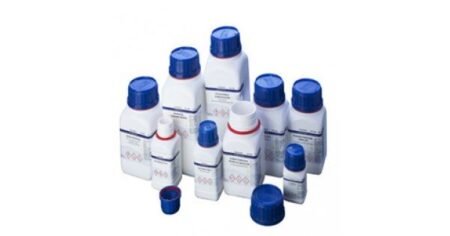
Description
Specifications Table
| Product Name | BENZENE 99.5% AR/ACS | 00039 | Loba Chemie |
|---|---|
| Pack Size | 500ml |
| Form | Liquid |
| Grade | AR/ACS |
| Application | Laboratory research, synthesis, analytical testing |
Product Description
When precision matters in your lab work, BENZENE 99.5% AR/ACS from Loba Chemie delivers the purity and consistency you need. This high-grade benzene is meticulously refined to meet AR (Analytical Reagent) and ACS (American Chemical Society) standards, making it a trusted choice for researchers, chemists, and educators across India.
Whether you’re conducting organic synthesis, solvent extraction, or spectroscopic analysis, this benzene ensures reliable results. Its 99.5% purity minimizes impurities that could interfere with sensitive experiments, while its stable formulation guarantees batch-to-batch consistency. Many leading Indian universities and research institutions rely on this grade for critical applications.
At eqipped, we understand that lab supplies aren’t just products—they’re the foundation of your discoveries. That’s why we source only from reputable manufacturers like Loba Chemie and maintain strict quality checks before delivery. Need benzene for your next experiment? Order now and get it delivered to your lab doorstep.
The AR/ACS certification means this benzene meets stringent quality benchmarks for water content, residue on evaporation, and other critical parameters. It’s particularly valued in HPLC applications, where even trace contaminants can skew results. The 500ml pack size offers convenience for both small-scale trials and regular lab use.
Safety note: Benzene is a hazardous chemical. Always handle in a fume hood with proper PPE, including nitrile gloves and safety goggles. Store in a well-ventilated area away from ignition sources.
FAQs
What’s the difference between AR and ACS grade benzene?
AR (Analytical Reagent) grade meets general laboratory standards, while ACS grade follows stricter American Chemical Society specifications. This product meets both, offering maximum versatility for different applications.
Can I use this benzene for HPLC mobile phase preparation?
Yes, the high purity and low UV absorbance make it suitable for HPLC applications. However, we recommend filtering through a 0.2μm membrane before use to remove any potential particulate matter.
What safety precautions should I take when handling benzene?
Always use in a fume hood with nitrile gloves, safety goggles, and a lab coat. Benzene is flammable and carcinogenic—avoid inhalation and skin contact. Store in approved safety cabinets.
Is this benzene suitable for educational lab demonstrations?
Yes, many Indian universities use this grade for organic chemistry practicals. The consistent quality ensures reliable results for student experiments.
How quickly can I get this delivered in India?
eqipped offers fast delivery across major Indian cities. Orders placed before 2 PM are typically dispatched the same day, with delivery in 2-4 business days depending on your location.