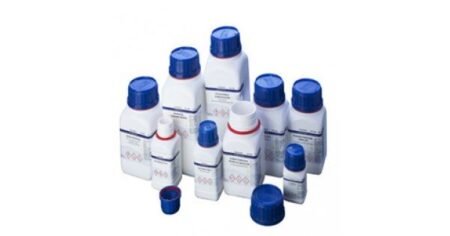
Description
Specifications Table
| Product Name | 4-BROMOACETANILIDE 98% For Synthesis | 2259C | Loba Chemie |
|---|---|
| Pack Size | 100 g, 500 g |
| Form | Powder |
| Grade | For Synthesis |
| Application | Organic synthesis, research, pharmaceutical intermediates |
Product Description
4-Bromoacetanilide 98% is a high-purity chemical compound widely used in organic synthesis and research laboratories. This versatile reagent serves as a key intermediate in the production of pharmaceuticals, agrochemicals, and other fine chemicals. With its reliable quality and consistent performance, it is a preferred choice for chemists and researchers working on complex molecular structures.
Whether you are a student conducting experiments or a professional researcher developing new compounds, this product ensures accurate and reproducible results. The 98% purity level makes it suitable for demanding applications where precision matters. When you buy 4-bromoacetanilide online from eqipped, you get a product that meets stringent quality standards, backed by trusted suppliers like Loba Chemie.
Looking for a reliable 4-bromoacetanilide supplier? Order now from eqipped for fast delivery and competitive pricing.
In organic chemistry, 4-bromoacetanilide is often used in reactions such as nucleophilic substitutions, coupling reactions, and as a starting material for synthesizing more complex molecules. Its stability and reactivity make it an essential component in many lab protocols. Researchers appreciate its ease of handling and the ability to integrate seamlessly into various synthetic routes.
For educational institutions and research labs, having access to high-quality chemicals like this one is crucial. Eqipped ensures that you receive products that are well-packaged, properly labeled, and accompanied by necessary documentation for traceability. Whether you need a small quantity for a single experiment or larger batches for ongoing projects, eqipped provides flexible options to suit your requirements.
Buy 4-bromoacetanilide online today and experience hassle-free procurement with eqipped.
FAQs
What is 4-bromoacetanilide used for?
4-Bromoacetanilide is primarily used in organic synthesis as an intermediate for pharmaceuticals, agrochemicals, and other fine chemicals. It is also employed in research labs for various chemical reactions.
How should I store 4-bromoacetanilide?
Store the product in a cool, dry place away from direct sunlight and moisture. Keep the container tightly sealed to prevent contamination.
Is 4-bromoacetanilide soluble in water?
No, 4-bromoacetanilide is not highly soluble in water. It is more soluble in organic solvents like ethanol, methanol, and dimethyl sulfoxide (DMSO).
Can I buy 4-bromoacetanilide in bulk?
Yes, eqipped offers flexible pack sizes, including 100 g and 500 g options. For larger quantities, contact our customer support for customized solutions.
What safety precautions should I take when handling this chemical?
Always wear gloves, goggles, and a lab coat when handling 4-bromoacetanilide. Work in a fume hood to avoid inhalation, and follow proper disposal procedures as per local regulations.