Description
Specifications Table
| Product Name | 5-Bromo-4-Chloro-3-Indolyl-ß-D-Galactopyranoside (X-Gal) |
|---|---|
| Pack Size | 25 mg, 100 mg, 1 g |
| Form | Powder |
| Grade | Molecular Biology Grade |
| Application | Blue-white screening, bacterial cloning, gene expression studies |
Product Description
5-Bromo-4-Chloro-3-Indolyl-ß-D-Galactopyranoside, commonly known as X-Gal, is a vital substrate used in molecular biology for blue-white screening. This high-purity compound is essential for identifying recombinant bacterial colonies in cloning experiments. When cleaved by β-galactosidase, X-Gal produces a distinctive blue color, making it indispensable for researchers working with plasmid vectors like pUC or pBluescript.
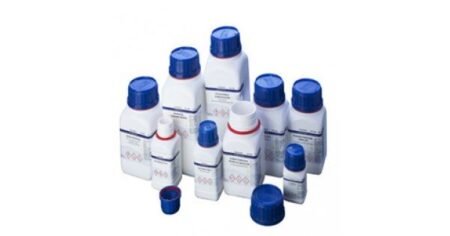
At eqipped, we provide X-Gal in three convenient pack sizes—25 mg, 100 mg, and 1 g—to suit varying research needs. Whether you’re a student setting up your first cloning experiment or a seasoned researcher optimizing protocols, this reagent ensures reliable results. The powder form allows for easy preparation of working solutions, and its stability makes it a staple in labs across India.
X-Gal is particularly useful in applications requiring sensitive detection of β-galactosidase activity. It’s widely used in genetic engineering, functional genomics, and protein expression studies. For best results, store the powder at -20°C and prepare fresh solutions before each use to maintain optimal performance.
Need X-Gal for your next experiment? Buy online now and get lab-ready reagents delivered to your doorstep.
This product is sourced from Loba Chemie, a trusted name in laboratory chemicals, ensuring consistency and purity. Whether you’re ordering for academic research or industrial applications, eqipped makes it easy to access premium molecular biology reagents without hassle.
FAQs
What is X-Gal used for in molecular biology?
X-Gal is used for blue-white screening to distinguish between recombinant and non-recombinant bacterial colonies. It helps identify successful cloning events by producing a blue color when cleaved by β-galactosidase.
How do I prepare a working solution of X-Gal?
Dissolve X-Gal powder in dimethylformamide (DMF) or DMSO to a concentration of 20-40 mg/mL. Store the stock solution at -20°C and add it to agar plates at a final concentration of 40-80 µg/mL.
Can I use X-Gal for applications other than cloning?
Yes, X-Gal is also used in gene expression studies, promoter analysis, and detecting β-galactosidase activity in various biological systems.
What is the shelf life of X-Gal powder?
When stored properly at -20°C, X-Gal powder remains stable for up to 2 years. Avoid repeated freeze-thaw cycles to maintain its activity.
Does eqipped offer bulk discounts on X-Gal?
Yes, we provide competitive pricing for bulk orders. Contact our support team to discuss your requirements and get the best deals on molecular biology reagents.