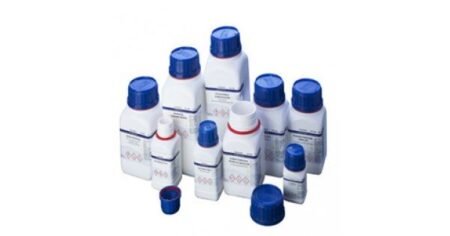
Description
Specifications Table
| Product Name | DIASTASE (FUNGAL) | 03240 | Loba Chemie |
|---|---|
| Pack Size | 100g |
| Form | Powder |
| Grade | Laboratory Grade |
| Application | Starch hydrolysis, biochemical research, enzyme studies |
Product Description
Diastase (Fungal) is a high-purity enzyme derived from fungal sources, widely used in laboratories for starch hydrolysis and biochemical experiments. This enzyme is essential for researchers and students working in biochemistry, microbiology, and food science. Its reliable activity ensures consistent results in enzymatic assays and industrial applications.
Whether you’re conducting experiments in a university lab or developing new research protocols, fungal diastase from Loba Chemie provides the precision and performance you need. The powder form allows for easy dissolution and integration into various experimental setups.
For those looking to buy diastase fungal online, eqipped offers a seamless purchasing experience with authentic Loba Chemie products. Our platform ensures you receive lab-grade enzymes with proper documentation and fast delivery across India.
Need fungal diastase for your next experiment? Order now and get it delivered to your lab.
FAQs
What is the shelf life of fungal diastase?
When stored properly in a cool, dry place, fungal diastase typically has a shelf life of 24 months from the date of manufacture.
Can this enzyme be used in food industry applications?
While this is a laboratory-grade product, similar fungal diastase enzymes are used in food processing. For industrial applications, consult with a specialist.
How should I prepare a solution of diastase for my experiment?
Dissolve the required amount in distilled water or buffer solution as per your protocol. Typical concentrations range from 0.1% to 1% depending on the application.
Is this product suitable for student lab experiments?
Yes, this fungal diastase is commonly used in educational settings for demonstrating enzyme activity and starch hydrolysis.
Where can I buy authentic Loba Chemie diastase online?
You can purchase genuine Loba Chemie products, including this fungal diastase, from eqipped with assured quality and proper documentation.