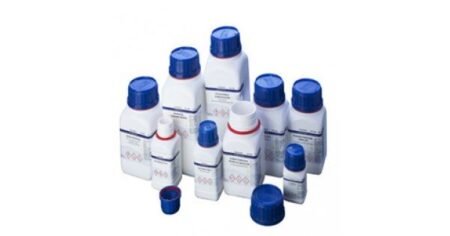
Description
Specifications Table
| Product Name | Mercury(II) nitrate monohydrate |
|---|---|
| Pack Size | 250 g |
| Form | Crystalline solid |
| Grade | Lab grade |
| Application | Analytical reagent, qualitative testing, research |
Product Description
Mercury(II) nitrate monohydrate is a highly versatile inorganic compound widely used in laboratories for qualitative analysis and research applications. This lab-grade chemical from Loba Chemie ensures consistent purity and reliability, making it ideal for educational institutions, research facilities, and industrial testing.
With its crystalline form and stable composition, this mercury nitrate variant serves as a key reagent in various chemical reactions, including precipitation tests and synthesis processes. Researchers and students alike rely on its precision for accurate experimental results.
Need high-quality mercury nitrate for your lab? Buy Mercury(II) nitrate monohydrate online from eqipped today.
The compound is particularly valued in analytical chemistry for detecting halides and other anions due to its characteristic reactions. Its monohydrate form offers enhanced stability, reducing the risk of decomposition during storage or handling.
When working with mercury compounds, proper safety protocols must be followed. Always use appropriate personal protective equipment (PPE) and handle in a well-ventilated area or fume hood. eqipped recommends adhering to standard laboratory safety guidelines when using this chemical.
FAQs
What is the purity level of this mercury nitrate monohydrate?
This product meets lab-grade standards with consistent purity suitable for analytical applications. Exact specifications are available in the certificate of analysis provided with each batch.
How should I store mercury(II) nitrate monohydrate?
Store in a tightly sealed container in a cool, dry place away from incompatible substances. Keep away from direct sunlight and moisture to maintain stability.
Can this be used for educational laboratory experiments?
Yes, this lab-grade mercury nitrate is commonly used in educational settings for qualitative analysis demonstrations under proper supervision.
What safety precautions are necessary when handling this chemical?
Always wear nitrile gloves, safety goggles, and a lab coat. Work in a fume hood and avoid any direct contact. Have appropriate spill control measures ready.
Does eqipped provide bulk quantities of mercury nitrate?
For bulk requirements, please contact our customer support team. We can arrange special packaging and documentation for larger orders while maintaining product integrity.