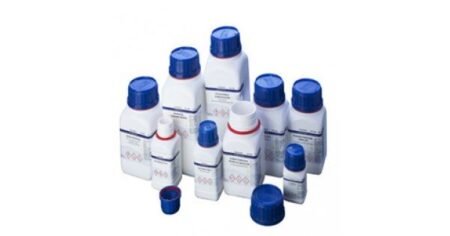
Description
Specifications Table
| Product Name | NITRIC ACID 1M (1N) STANDARDIZED SOLUTION | R210B | Loba Chemie |
|---|---|
| Pack Size | 1000 ml |
| Form | Liquid |
| Grade | Lab Grade |
| Application | Titrations, analytical chemistry, laboratory research |
Product Description
When precision matters in your lab experiments, a standardized nitric acid solution is indispensable. This Nitric Acid 1M (1N) Standardized Solution from Loba Chemie (R210B) is meticulously prepared to ensure accurate and reproducible results in titrations, analytical chemistry, and other laboratory applications. Whether you’re a student, researcher, or educator, this solution offers the reliability you need for consistent outcomes.
Nitric acid is a fundamental reagent in laboratories, widely used for acid-base titrations, sample digestion, and as a cleaning agent for glassware. The 1M (1N) concentration makes it versatile for both qualitative and quantitative analyses. Loba Chemie’s standardized solution eliminates the guesswork of manual dilution, saving you time while maintaining high accuracy.
At eqipped, we understand the importance of quality reagents in scientific work. That’s why we source this nitric acid solution from Loba Chemie, a trusted name in laboratory chemicals. Each batch is standardized to meet strict quality control standards, ensuring you receive a product that performs as expected every time.
Upgrade your lab’s chemical inventory with this ready-to-use nitric acid solution. Order now and experience hassle-free experimentation with consistent results.
This solution is particularly useful for educational institutions where students are learning titration techniques. The pre-standardized concentration helps eliminate preparation errors, allowing students to focus on understanding the principles of volumetric analysis. Researchers will appreciate the consistency in their analytical procedures, whether they’re working in environmental testing, pharmaceutical analysis, or materials science.
The 1000 ml pack size is ideal for laboratories with moderate usage, providing enough volume for multiple experiments while maintaining freshness. The solution comes in a durable, leak-proof container that ensures safe storage and handling. Always remember to follow proper laboratory safety protocols when working with acids.
FAQs
What is the difference between 1M and 1N nitric acid?
For nitric acid, 1M (molar) is equivalent to 1N (normal) because it donates one proton per molecule. This solution is standardized to both 1 molar and 1 normal concentration, making it suitable for most titration applications where either unit is specified.
How should I store this nitric acid solution?
Store the solution in its original container at room temperature, away from direct sunlight and heat sources. Keep the bottle tightly closed when not in use to prevent concentration changes due to evaporation. Always store acids separately from bases and other reactive chemicals.
Can this solution be used for cleaning laboratory glassware?
Yes, this 1M nitric acid solution is effective for cleaning glassware by removing organic residues and metal ions. For tougher deposits, you might need a more concentrated solution, but this works well for routine cleaning of volumetric flasks, pipettes, and other lab equipment.
Is this solution suitable for food testing applications?
While this is a lab-grade solution, for food testing applications, you should use analytical grade or higher purity reagents specifically designed for food analysis to ensure compliance with regulatory standards and avoid potential contamination issues.
What is the shelf life of this standardized nitric acid solution?
When stored properly in its original, tightly sealed container, this solution typically maintains its standardized concentration for 12-24 months. However, we recommend verifying the concentration periodically if used for critical applications, as slight changes can occur over time.