Description
Specifications Table
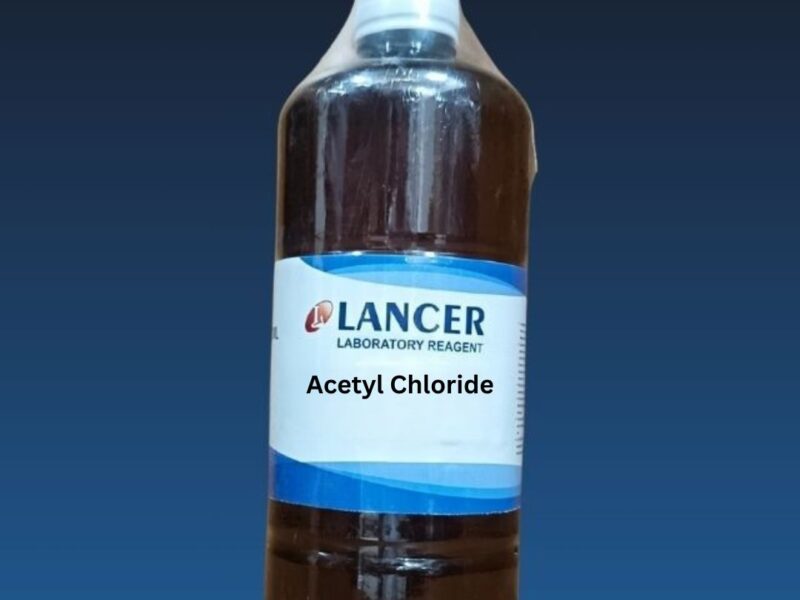
Product Name – 1,2-Dichloroethane, 99+%, for spectroscopy ACS
Quantity/Pack Size – 2.5LT, 500ML
Form – Liquid
Grade – ACS, 99%+
Application – Spectroscopy, solvent extraction
Product Overview
1,2-Dichloroethane (99%+) is a high-purity, ACS-grade solvent specifically formulated for spectroscopy applications. This colorless liquid features exceptionally low UV absorption, making it ideal for analytical techniques requiring minimal interference. Its high solvent strength (dielectric constant of 10.4) enables efficient dissolution of both polar and nonpolar compounds. The product undergoes rigorous quality control to ensure ≤0.05% water content and ≤0.005% non-volatile residue, meeting strict ACS specifications. The solvent’s narrow boiling range (83-84°C) provides consistent evaporation rates for reproducible results. Packaged in amber glass bottles to prevent photodegradation, this reagent maintains stability for 24+ months when stored properly. The 99%+ purity level eliminates common impurities like ethanol, benzene, and chlorinated byproducts that could compromise spectral analysis. Its low viscosity (0.84 cP at 20°C) facilitates easy handling in laboratory workflows while maintaining chemical stability across a wide temperature range.
FAQs
1. What is the maximum allowable water content in this 1,2-Dichloroethane?
The ACS specification limits water content to ≤0.05% for this grade of 1,2-Dichloroethane.
2. Can this solvent be used with plastic labware?
1,2-Dichloroethane will dissolve most plastics including polystyrene and polyethylene. Use only with glass or PTFE containers.
3. What are the key impurities tested for in this grade?
Standard testing includes benzene, chloroform, ethanol, and non-volatile residues, all maintained below ACS limits.
4. How should I dispose of unused 1,2-Dichloroethane?
Collect in approved halogenated solvent waste containers and dispose through licensed hazardous waste handlers.
5. What’s the difference between this and reagent-grade 1,2-Dichloroethane?
ACS grade has stricter purity requirements (99%+ vs 98%+) and additional testing for spectroscopy applications.