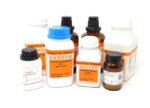
Description
Specifications Table
Product Name – 1,4-Dioxane anhydrous, 30 ppm H2O Anhydrous solvent
Quantity/Pack Size – 250 ml
Form – Liquid
Grade – Anhydrous (≤30 ppm H2O)
Application – Solvent for organic synthesis, polymerization, and analytical chemistry
Product Overview
1,4-Dioxane anhydrous is a high-purity, water-free solvent designed for critical laboratory applications where moisture contamination must be minimized. With a maximum water content of 30 ppm, this anhydrous grade ensures reliable performance in moisture-sensitive reactions, polymerization processes, and as a solvent in organic synthesis. Its low water content makes it particularly suitable for reactions involving Grignard reagents, organometallic compounds, and other hygroscopic materials. The solvent’s excellent solvency power and miscibility with water and organic solvents further enhance its versatility in laboratory settings. Packaged under inert conditions to maintain its anhydrous properties, this 1,4-Dioxane variant is stabilized to prevent peroxide formation, ensuring long-term stability and safety during storage. The product is rigorously tested to meet strict quality standards, providing consistent results in analytical and preparative chemistry applications. Its high boiling point (101°C) and low viscosity make it an efficient solvent for a wide range of laboratory procedures, while its compatibility with various materials allows for flexible use in different experimental setups.
FAQs
1. What is the maximum allowable water content in this 1,4-Dioxane?
The product is guaranteed to contain ≤30 ppm (parts per million) of water, making it suitable for anhydrous applications.
2. How should this anhydrous solvent be stored to maintain its purity?
Store the sealed container in a cool, dry place away from direct sunlight and ignition sources. Keep the container tightly closed when not in use to prevent moisture absorption.
3. Is this 1,4-Dioxane stabilized against peroxide formation?
Yes, the product is stabilized to inhibit peroxide formation, but it’s recommended to test for peroxides periodically if stored for extended periods.
4. What materials are compatible with this anhydrous solvent?
It is compatible with most laboratory glassware and many plastics including PTFE and polypropylene. Avoid using with strong oxidizing agents.
5. Can this be used as a substitute for THF in reactions?
While both are ethers, 1,4-Dioxane has different solvency properties and a higher boiling point than THF, which may affect reaction outcomes. Always verify compatibility with your specific application.