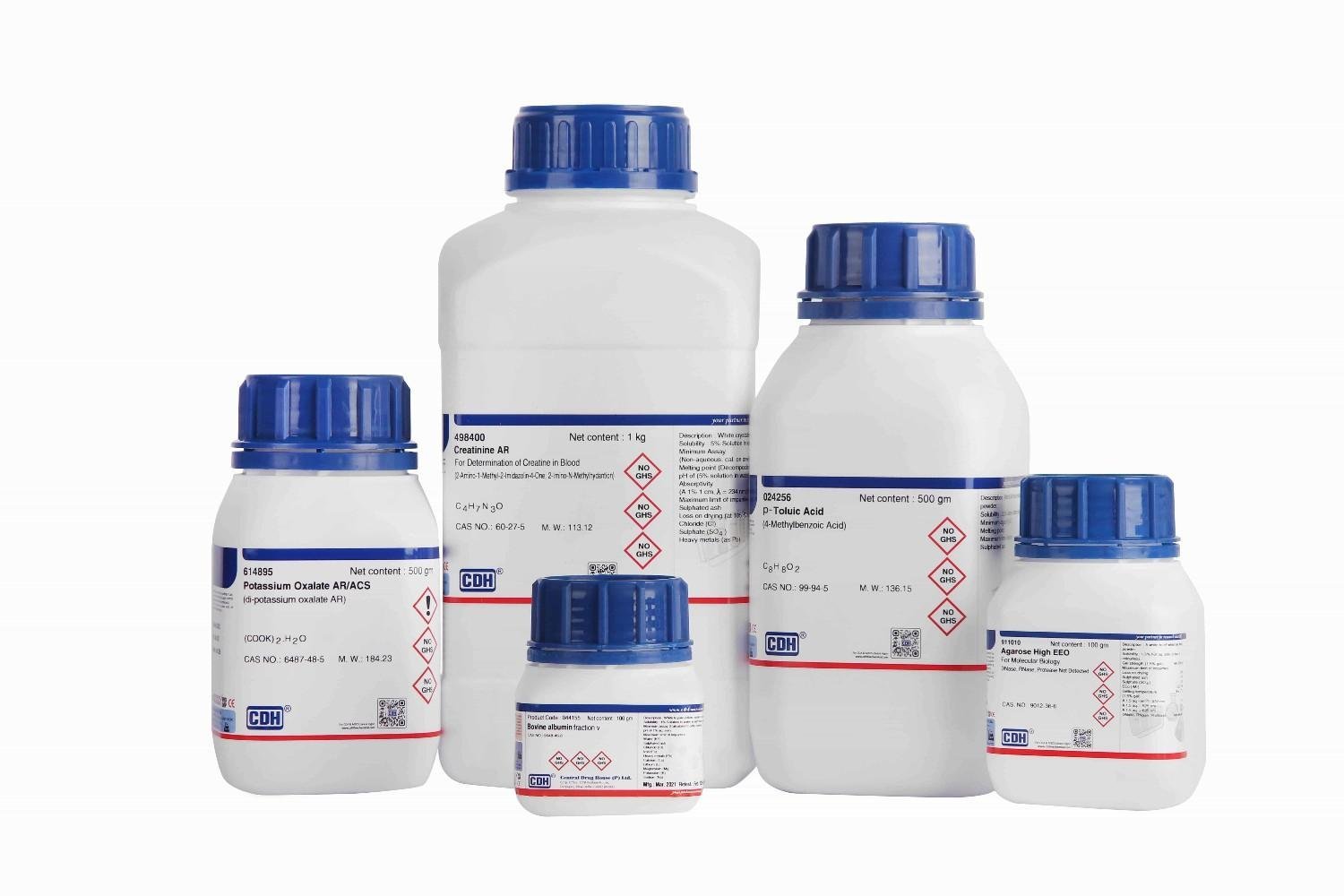
Description
Specifications Table
| Product Name | 2-Butanol For Molecular Biology |
|---|---|
| Quantity/Pack Size | 500ml |
| Form | Liquid |
| Grade | Molecular Biology |
| Application | DNA/RNA extraction, protein purification, solvent for lab use |
Product Description
When precision matters in molecular biology, the quality of your solvents can make all the difference. 2-Butanol for Molecular Biology (920600 | CDH) is a high-purity reagent designed specifically for sensitive laboratory applications. Whether you’re working on nucleic acid isolation, protein studies, or general solvent-based protocols, this grade ensures minimal interference and consistent results.
Unlike industrial-grade alternatives, this molecular biology-grade 2-butanol undergoes rigorous purification to remove contaminants like nucleases, proteases, and other impurities that could compromise your experiments. Its low water content and high evaporation rate make it particularly useful in extraction protocols where residue-free drying is critical.
Researchers and students alike trust this solvent for its reliability in protocols such as phenol-chloroform extractions, where even trace impurities can affect yield and purity. The 500ml pack size offers an optimal balance between cost-efficiency and storage convenience for most lab settings.
At eqipped, we understand that molecular biology work demands reagents you can depend on. That’s why we source this 2-butanol from CDH, a brand synonymous with quality in Indian laboratories. Every batch meets strict quality control standards to ensure it performs as expected in your critical applications.
Need consistent results in your molecular biology experiments? Choose 2-butanol that matches your standards.
Key Applications in Molecular Biology
The versatility of this high-purity 2-butanol makes it indispensable in several molecular biology workflows:
For DNA and RNA extraction, it serves as an excellent alternative to other alcohols in precipitation steps. Its moderate polarity helps in efficient nucleic acid recovery while minimizing co-precipitation of salts and other contaminants. Many researchers prefer it in phenol-chloroform-isoamyl alcohol mixtures where its properties help maintain the integrity of the organic phase.
In protein biochemistry, 2-butanol finds use in precipitation protocols and as a solvent in various assay systems. Its ability to denature proteins at higher concentrations while being less aggressive than some other alcohols makes it particularly valuable in certain purification steps.
The solvent also plays a role in lipid extraction protocols and as a component in mobile phases for certain chromatographic techniques. Its UV transparency in the typical range used for nucleic acid quantification (260 nm) makes it suitable for spectroscopic applications where solvent interference could be problematic.
Safety and Handling Considerations
While 2-butanol is generally safer than some other laboratory solvents, proper handling remains essential. Always use this chemical in a well-ventilated area or under a fume hood, as prolonged exposure to vapors may cause irritation. The molecular biology grade maintains high purity, but standard laboratory safety practices should always be followed.
Store the bottle tightly sealed at room temperature, away from direct sunlight and ignition sources. The 500ml packaging provides an ideal size for frequent use while minimizing the risk associated with handling larger volumes. For long-term storage, consider using a secondary container to prevent potential degradation from repeated opening.
Why This Grade Matters for Your Research
Not all 2-butanol is created equal when it comes to molecular biology applications. The CDH molecular biology grade offers several advantages over technical or reagent grades:
First, the purification process specifically targets removal of nucleases and proteases that could degrade your precious samples. This is particularly crucial when working with RNA, which is notoriously sensitive to RNase contamination. The grade also ensures minimal heavy metal content that could interfere with enzymatic reactions.
Second, the consistent batch-to-batch quality means your protocols will yield reproducible results over time. This reliability is especially important for research projects that span months or years, where even slight variations in reagent quality could introduce unwanted variables.
Finally, the documentation and quality assurance that comes with this molecular biology grade provides the traceability that many research institutions and funding agencies require. When you purchase from eqipped, you’re getting a product that meets international standards for molecular biology applications.
Common Questions About Using 2-Butanol in Labs
Many researchers new to molecular biology often have questions about proper solvent selection and usage. One frequent query concerns whether 2-butanol can completely replace other alcohols like ethanol or isopropanol in precipitation protocols. While it can often be used interchangeably, some protocols may require optimization as the different alcohols have slightly different properties in terms of precipitation efficiency and salt carryover.
Another common consideration is the appropriate concentration to use. For most nucleic acid precipitation applications, a final concentration of 30-50% 2-butanol typically works well, though this may vary depending on your specific protocol and the other components in your solution.
Researchers also sometimes ask about the shelf life of opened bottles. While the molecular biology grade maintains its purity well when stored properly, we recommend using opened bottles within 6-12 months for optimal performance, especially if your work involves particularly sensitive applications.
FAQs
What is the difference between molecular biology grade and reagent grade 2-butanol?
Molecular biology grade undergoes additional purification to remove nucleases, proteases, and other contaminants that could interfere with sensitive biological assays. Reagent grade may contain trace impurities that don’t affect general chemical applications but could compromise molecular biology experiments.
Can I use this 2-butanol for DNA precipitation instead of ethanol?
Yes, 2-butanol can be used for DNA precipitation and often provides cleaner pellets with less salt contamination compared to ethanol. However, you may need to adjust the concentration (typically 30-50% final concentration) and incubation times based on your specific protocol.
What safety precautions should I take when handling 2-butanol?
Always use in a well-ventilated area or fume hood. Wear appropriate PPE including gloves and safety glasses. Avoid inhalation of vapors and skin contact. Store away from heat sources and open flames as it is flammable.
How should I store 2-butanol for molecular biology applications?
Store tightly sealed at room temperature, away from direct sunlight and ignition sources. For long-term storage, consider using a desiccator or secondary container to minimize exposure to moisture when not in use.
Is this 2-butanol suitable for RNA work?
Yes, the molecular biology grade is specifically purified to be nuclease-free, making it suitable for RNA applications where RNase contamination could degrade your samples. Always follow proper RNA handling techniques to maintain integrity.