Description
Specifications Table
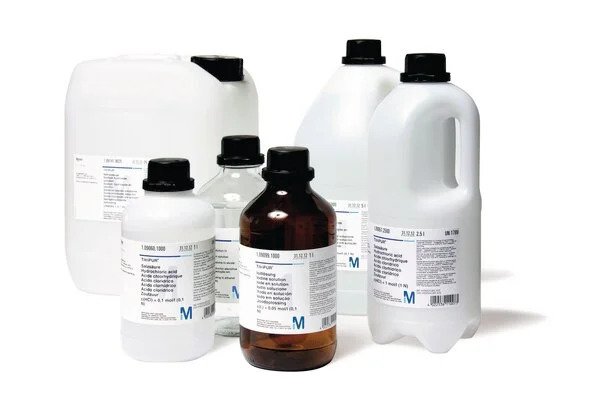
| Product Name | 2-Propanol Gradient Grade For Liquid Chr | 1.01040.1000 | Merck |
|---|---|
| Pack Size | 1 LTR |
| Form | Liquid |
| Grade | Gradient Grade (HPLC) |
| Application | Liquid Chromatography, HPLC, Analytical Testing |
Product Description
When precision matters in liquid chromatography, the quality of your solvent can make or break your results. 2-Propanol Gradient Grade from Merck is specifically formulated for HPLC and other high-performance analytical techniques, ensuring minimal interference and consistent baseline stability. Whether you’re a researcher, student, or lab educator, this gradient-grade solvent delivers the purity and reliability your experiments demand.
Unlike technical-grade isopropanol, this variant undergoes rigorous purification to remove impurities like UV-absorbing compounds, residual water, and particulate matter. The result? Sharper peaks, reduced noise, and more reproducible data—every time. It’s the go-to choice for gradient elution methods where solvent consistency is non-negotiable.
At eqipped, we understand that lab supplies aren’t just products—they’re tools that drive discovery. That’s why we source 2-Propanol Gradient Grade directly from Merck, a name synonymous with analytical excellence. Whether you’re separating complex biomolecules or validating pharmaceutical compounds, this solvent helps you achieve publication-ready results without compromise.
Upgrade your chromatography workflow today. Buy 2-Propanol Gradient Grade online and experience the difference purity makes.
Why Gradient Grade Matters in Liquid Chromatography
Not all isopropanol is created equal. Here’s why gradient grade stands out for HPLC applications:
1. Ultra-Low UV Absorbance: Technical-grade solvents often contain contaminants that absorb UV light, skewing detector readings. Gradient-grade 2-propanol is purified to minimize UV interference, ensuring accurate peak detection even at low wavelengths (e.g., 210 nm).
2. Consistent Baseline Stability: Impurities can cause baseline drift or spikes, making data interpretation difficult. This solvent’s tight quality control guarantees a stable baseline, critical for gradient methods where solvent composition changes dynamically.
3. Compatibility with MS Detection: For labs using LC-MS, residual ions or non-volatile residues can clog instruments or suppress ionization. Merck’s gradient-grade 2-propanol is optimized to reduce such risks, protecting your expensive equipment.
4. Batch-to-Batch Reliability: Merck’s manufacturing processes adhere to strict ISO standards, so you can trust that every bottle of 2-Propanol Gradient Grade performs identically—no recalibration needed between experiments.
Applications: Where This Solvent Shines
This versatile solvent is a staple in labs across India for:
HPLC and UPLC: Ideal for reverse-phase chromatography, especially in gradient elution protocols for proteins, peptides, and small molecules.
Pharmaceutical Analysis: Used in drug purity testing, impurity profiling, and dissolution studies where regulatory compliance (USP/EP) is required.
Environmental Testing: Helps in extracting and analyzing pesticides, herbicides, and other organic pollutants from water or soil samples.
Academic Research: A favorite among students and educators for teaching chromatography principles, thanks to its predictable behavior and safety profile.
Food and Beverage Testing: Employed in detecting additives, contaminants, or adulterants in products like edible oils, alcoholic beverages, and dairy.
How to Store and Handle 2-Propanol Gradient Grade
To maintain the solvent’s integrity and ensure lab safety:
Storage: Keep the bottle tightly sealed in a cool, dry place away from direct sunlight. Store at temperatures between 15–25°C. Avoid refrigeration, as moisture condensation can dilute the solvent.
Handling: Always use in a fume hood or well-ventilated area. Wear nitrile gloves and safety goggles to prevent skin/eye contact. Never use near open flames or sparks.
Dispensing: Use glass or PTFE-coated pipettes to avoid plastic leachables. For bulk transfers, opt for solvent-resistant bottles (e.g., amber glass).
Disposal: Collect waste in designated solvent waste containers. Do not pour down drains. Follow local hazardous waste regulations for disposal.
Common Mistakes to Avoid
Even experienced researchers can overlook these pitfalls:
Mixing Grades: Never substitute technical or reagent-grade isopropanol in HPLC. Impurities can damage columns or ruin results.
Ignoring Expiry Dates: While solvents don’t “spoil,” opened bottles can absorb moisture or contaminants over time. Use within 12 months of opening for best results.
Skipping Degassing: Dissolved gases in solvents can form bubbles in HPLC systems, causing pressure fluctuations. Degas using helium sparging or sonication before use.
Overlooking Mobile Phase pH: 2-Propanol can alter the pH of aqueous mobile phases. Always measure and adjust pH after mixing solvents.
Why eqipped is the Smart Choice for Lab Solvents
When you buy 2-Propanol Gradient Grade from eqipped, you’re not just getting a bottle of solvent—you’re gaining a partner in your research journey. Here’s what sets us apart:
Genuine Merck Products: We source directly from authorized distributors, so you’re always getting authentic, high-purity solvents—no counterfeit risks.
Fast, Reliable Delivery: With warehouses across India, your order reaches you quickly, whether you’re in Bangalore, Mumbai, or Delhi. Track your shipment in real time.
Transparent Pricing: No hidden fees. The price you see is what you pay, with competitive rates on bulk orders for institutions.
Expert Support: Stuck choosing between gradient grade and HPLC grade? Our team of scientists is just a call away to help you pick the right solvent for your application.
Hassle-Free Returns: Received a damaged bottle? We’ll replace it promptly—no questions asked.
Ready to elevate your chromatography results? Order 2-Propanol Gradient Grade online now and enjoy seamless delivery to your lab doorstep.
FAQs
What is the difference between gradient grade and HPLC grade 2-propanol?
Gradient grade 2-propanol is specifically optimized for gradient elution in HPLC, with stricter controls on UV absorbance and baseline stability. While HPLC grade is also high-purity, gradient grade ensures consistent performance during solvent composition changes, critical for methods like reverse-phase gradients.
Can I use this solvent for DNA/RNA extraction?
While 2-propanol is commonly used in nucleic acid precipitation, this gradient grade is not required for such applications. For molecular biology work, reagent-grade or molecular biology-grade isopropanol is more cost-effective and sufficient.
How long does a 1L bottle last in a typical HPLC lab?
Usage varies, but a 1L bottle typically lasts 2–4 weeks in a moderate-throughput lab running daily HPLC analyses. For high-volume labs, consider purchasing larger pack sizes (e.g., 2.5L or 4L) to reduce frequency of reordering.
Is this solvent compatible with LC-MS?
Yes, Merck’s gradient-grade 2-propanol is suitable for LC-MS applications. It undergoes additional purification to minimize non-volatile residues that could interfere with mass spectrometry detection or clog the ion source.
What safety precautions should I take when using 2-propanol?
Always wear nitrile gloves, safety goggles, and a lab coat. Work in a fume hood to avoid inhalation. Keep away from ignition sources, as vapors are highly flammable. In case of spills, absorb with inert material (e.g., vermiculite) and dispose of as hazardous waste.