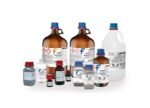
Description
Specifications Table
Product Name – 2,2-Bis(hydroxymethyl)-2,2′,2”-nitrilotriethanol, 99+%, for biochemistry
Quantity/Pack Size – 100GR, 500GR
Form – Solid
Grade – 99% (Biochemistry Grade)
Application – pH buffering, protein electrophoresis, molecular biology
Product Overview
2,2-Bis(hydroxymethyl)-2,2′,2”-nitrilotriethanol, commonly known as Bis-Tris, is a high-purity biochemical reagent designed for precision applications in molecular biology and protein research. With a purity level of 99% or higher, this compound ensures minimal interference in sensitive assays, making it ideal for electrophoresis, gel-based separations, and buffering systems. Its unique chemical structure provides excellent pH stability across a broad range, particularly in the neutral to slightly alkaline range (pH 6.0–7.2), where it outperforms traditional buffers like Tris. The low conductivity and minimal metal ion contamination further enhance its suitability for high-resolution techniques such as SDS-PAGE, isoelectric focusing, and Western blotting. This grade is specifically processed to eliminate trace impurities, including nucleases and proteases, ensuring reproducibility in critical experiments. The solid form allows for easy dissolution in aqueous solutions, while its compatibility with common laboratory solvents expands its versatility. Whether used as a standalone buffer or in combination with other reagents, this Bis-Tris variant delivers consistent performance, reducing variability in experimental outcomes. Its high solubility and resistance to temperature-induced degradation make it a reliable choice for long-duration protocols and storage-sensitive applications.
FAQs
1. What is the ideal pH range for Bis-Tris buffer in biochemical applications?
Bis-Tris functions optimally between pH 6.0 and 7.2, where it provides stable buffering capacity without significant temperature or concentration effects. This range is particularly useful for protein-based assays requiring neutral conditions.
2. Can this Bis-Tris grade be used for native PAGE instead of Tris-glycine buffers?
Yes, this 99% pure Bis-Tris is suitable for native PAGE due to its low ionic strength and minimal interaction with proteins. It often yields sharper band resolution compared to Tris-glycine systems, especially for high-molecular-weight analytes.
3. How should Bis-Tris powder be stored to maintain its stability?
Store the unopened container in a cool, dry place away from direct sunlight and moisture. Once opened, seal the pack tightly and use within 12 months for best results. Avoid exposure to humidity, as it can cause clumping.
4. Is this Bis-Tris compatible with mass spectrometry (MS) applications?
While Bis-Tris is not volatile, its low impurity profile makes it compatible with downstream MS sample preparation. However, it should be removed via dialysis or desalting prior to ionization to prevent signal suppression.
5. What alternatives exist if Bis-Tris is unavailable for a specific protocol?
For similar buffering capacity, TAPS (pH 7.7–9.1) or HEPES (pH 6.8–8.2) can be substituted, though pH adjustments may be required. For electrophoresis, MES or MOPS buffers are common alternatives, but resolution may vary.