Description
Specifications Table
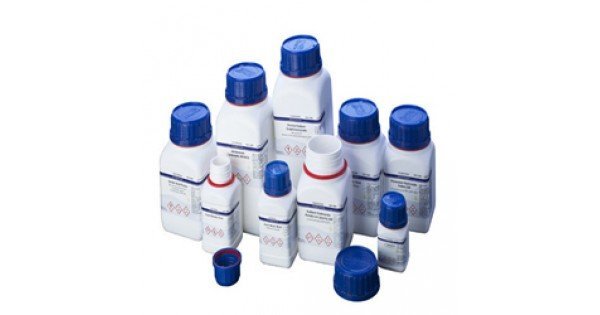
Product Name – 2,6-DICHLOROPHENOL 98% For Synthesis
Quantity/Pack Size – 100 g, 500 g
Form – Crystalline powder
Grade – For Synthesis
Application – Organic synthesis, reagent preparation
Product Overview
2,6-Dichlorophenol 98% is a high-purity aromatic compound widely used in organic synthesis due to its reactive hydroxyl and chlorine substituents. This lab-grade reagent ensures minimal impurities, making it suitable for applications requiring precise stoichiometric control. The crystalline powder form guarantees easy handling and accurate weighing, while its synthesis-grade purity meets stringent laboratory standards. Its molecular structure enables selective reactivity, making it a versatile intermediate in halogenation, coupling, and condensation reactions. The compound’s stability under standard storage conditions ensures long shelf life without degradation. Researchers benefit from its consistent performance in derivatization processes, where purity directly impacts yield and reproducibility. Compatible with most organic solvents, it dissolves efficiently for homogeneous reaction mixtures. The 98% assay specification confirms its reliability for critical synthesis steps, reducing the need for additional purification. Whether used as a starting material or a functionalizing agent, this 2,6-Dichlorophenol variant delivers dependable results in controlled lab environments.
FAQs
1. What is the melting point of 2,6-Dichlorophenol 98%?
The melting point of 2,6-Dichlorophenol typically ranges between 66-69°C, though slight variations may occur based on purity and crystallization conditions.
2. Can this compound be used in aqueous solutions?
2,6-Dichlorophenol has limited solubility in water (approximately 0.3 g/100 mL at 20°C) but dissolves readily in organic solvents like ethanol, acetone, or ether.
3. What are the storage recommendations for this product?
Store in a tightly sealed container at room temperature, away from moisture and direct sunlight. Keep in a well-ventilated area to prevent vapor accumulation.
4. Is this product compatible with glassware?
Yes, it is compatible with standard borosilicate glassware. However, prolonged contact with alkaline solutions may cause etching, so rinse equipment promptly after use.
5. How does the synthesis grade differ from analytical grade?
Synthesis grade prioritizes reactivity and suitability for chemical transformations, while analytical grade focuses on ultra-high purity for quantitative analysis. This product is optimized for synthesis applications.