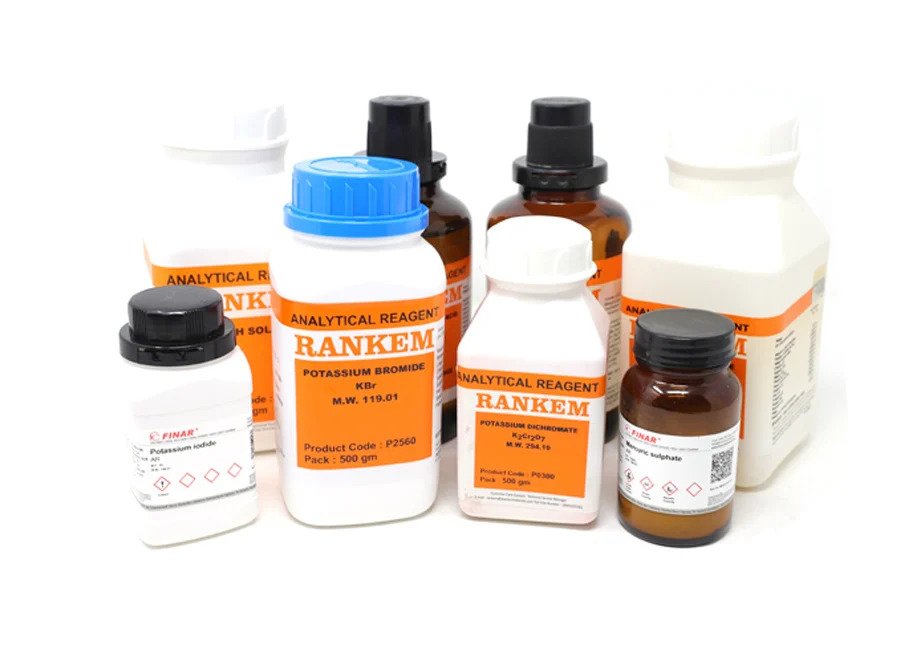
Description
Specifications Table
Product Name – 2,6-Dimethylaniline
Quantity/Pack Size – 100 ml
Form – Liquid
Grade – Analytical Reagent
Application – Organic synthesis, chemical reactions
Product Overview
2,6-Dimethylaniline is a high-purity aromatic amine widely recognized for its role in organic synthesis and chemical research. This analytical-grade reagent ensures minimal impurities, providing reliable and reproducible results in laboratory applications. Its molecular structure, featuring two methyl groups at the 2 and 6 positions, enhances its reactivity while maintaining stability under standard conditions. The compound is particularly valued for its consistent performance in reactions such as reductive aminations, coupling reactions, and as a building block in the synthesis of pharmaceutical intermediates. With a clear, pale yellow appearance, this liquid reagent is easy to handle and store, making it a practical choice for laboratories requiring precision. The analytical grade ensures compliance with stringent quality standards, reducing the risk of side reactions or contamination. Whether used in small-scale experiments or larger synthetic processes, 2,6-Dimethylaniline delivers the purity and performance demanded by modern chemical research.
FAQs
1. What is the shelf life of 2,6-Dimethylaniline when stored properly?
When stored in a cool, dry place away from direct sunlight and moisture, 2,6-Dimethylaniline typically retains its stability for up to 24 months from the date of manufacture.
2. Is this compound compatible with common organic solvents?
Yes, 2,6-Dimethylaniline is soluble in most organic solvents, including ethanol, methanol, acetone, and dichloromethane, making it versatile for various reaction conditions.
3. Are there any known alternatives to 2,6-Dimethylaniline for similar applications?
Alternatives like 2,6-Diethylaniline or 2,6-Diisopropylaniline can be used in some cases, but they may exhibit different reactivity profiles and physical properties.
4. What precautions should be taken while handling this chemical?
Always wear appropriate personal protective equipment, including gloves, goggles, and a lab coat, as 2,6-Dimethylaniline can cause skin and eye irritation. Work in a well-ventilated area or fume hood.
5. How is 2,6-Dimethylaniline sourced or manufactured?
This compound is typically synthesized through the nitration of m-xylene followed by reduction, ensuring high purity and consistency in the final product.