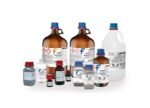
Description
Specifications Table
Product Name – 4,4′-Methylenebis(cyclohexyl isocyanate), 90%, mixture of isomers, AcroSeal®
Quantity/Pack Size – 1LT, 100ML
Form – Liquid
Grade – 90% pure
Application – Polymer synthesis, polyurethane formulations, cross-linking agent
Product Overview
4,4′-Methylenebis(cyclohexyl isocyanate), also known as H12MDI, is a high-purity diisocyanate compound supplied as a 90% mixture of isomers in an AcroSeal® packaging to ensure stability and minimize moisture exposure. This chemical is a key building block in the synthesis of polyurethane polymers, offering excellent mechanical properties and thermal stability. The cycloaliphatic structure provides enhanced UV resistance compared to aromatic isocyanates, making it suitable for applications requiring durability and weatherability. Its reactivity with polyols and other active hydrogen compounds allows for the formation of cross-linked networks, contributing to the rigidity and chemical resistance of the final product. The AcroSeal® packaging ensures long-term storage stability by preventing hydrolysis and contamination, maintaining the reagent’s reactivity for consistent experimental results. This product is particularly valued in formulations where low volatility and reduced toxicity are critical, offering a safer alternative to traditional isocyanates while delivering comparable performance in polymer chemistry applications.
FAQs
1. What is the shelf life of 4,4′-Methylenebis(cyclohexyl isocyanate) when stored properly?
The shelf life is typically 12-24 months when stored in a tightly sealed container under cool, dry conditions away from moisture and heat sources. The AcroSeal® packaging helps extend stability by minimizing air exposure.
2. Is this compound compatible with standard polyols used in polyurethane synthesis?
Yes, it reacts efficiently with polyester and polyether polyols to form polyurethane polymers. The cycloaliphatic structure provides compatibility with a wide range of polyol chemistries while maintaining controlled reaction kinetics.
3. Are there any safer alternatives to this isocyanate for lab-scale polymer research?
While cycloaliphatic isocyanates like this are generally safer than aromatic variants due to lower volatility, alternatives such as blocked isocyanates or waterborne polyurethane systems can be considered for reduced exposure risks in academic settings.
4. What precautions should be taken during handling to prevent degradation?
Always handle under a fume hood using nitrogen purging when transferring. Avoid contact with water or alcohols, as these will cause premature polymerization. Use moisture-free glassware and store opened containers with desiccant.
5. How does the isomer mixture composition affect the final polymer properties?
The mixture of isomers influences the polymer’s flexibility and thermal resistance. Higher trans-isomer content generally improves crystallinity and mechanical strength, while cis-isomers contribute to elasticity and lower melting points in the final product.