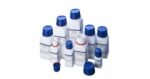
Description
Specifications Table
Product Name – 5-Bromo Uracil
Quantity/Pack Size – 1 g, 5 g
Form – Powder
Grade – Extra Pure (97%)
Application – Biochemical research, nucleic acid studies
Product Overview
5-Bromo Uracil (97% Extra Pure) is a halogenated pyrimidine analog widely used in molecular biology and biochemical research. This high-purity compound serves as a critical reagent for studying DNA/RNA synthesis, mutagenesis, and nucleotide incorporation due to its structural similarity to thymine. The extra pure grade ensures minimal impurities, providing reliable and reproducible results in sensitive applications. Its bromine substitution enhances stability while maintaining compatibility with standard laboratory protocols. Researchers rely on this reagent for experiments requiring precise base analog substitution, making it indispensable for advanced nucleic acid research. The powder form allows for easy dissolution and accurate dosing, while the 97% purity level guarantees consistency across experiments. Ideal for both qualitative and quantitative analyses, this compound meets stringent laboratory standards for purity and performance.
FAQs
1. What is the solubility of 5-Bromo Uracil in common solvents?
5-Bromo Uracil is soluble in DMSO, ethanol, and aqueous alkaline solutions but has limited solubility in water.
2. Can this compound be used for cell culture experiments?
While primarily used in nucleic acid studies, it can be incorporated into cell culture protocols with proper optimization and controls.
3. What storage conditions are recommended for long-term stability?
Store in a cool, dry place away from light and moisture, preferably at 2-8°C for extended shelf life.
4. Are there any known incompatibilities with other reagents?
Avoid strong oxidizing agents and bases, as they may degrade the compound or alter its chemical properties.
5. How does the bromine substitution affect its behavior compared to uracil?
The bromine atom increases molecular weight and lipophilicity while maintaining base-pairing capabilities with adenine.