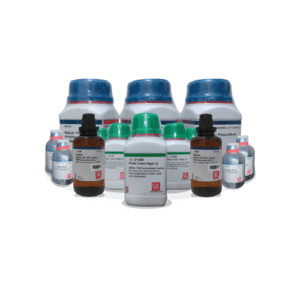
Description
Specifications Table
| Product Name | ABTS extrapure (2,2-Azino-bis(3-ethylbenzothiazoline-6-sulfonic acid) Diammonium Salt), 98% |
|---|---|
| Pack Size | 500 Mg, 1 Gms, 5 Gms |
| Form | Powder |
| Grade | Extrapure (98%) |
| Application | ELISA assays, enzyme activity studies, antioxidant research |
Product Description
ABTS extrapure is a highly purified diammonium salt of 2,2-Azino-bis(3-ethylbenzothiazoline-6-sulfonic acid), widely recognized for its role in biochemical and immunological research. With a purity of 98%, this reagent is essential for accurate ELISA assays, peroxidase activity measurements, and antioxidant capacity studies. Researchers and educators rely on ABTS extrapure for its consistent performance and reliability in sensitive laboratory applications.
Whether you’re conducting enzyme kinetics studies or developing diagnostic assays, ABTS extrapure ensures precise and reproducible results. Its stability and solubility make it a preferred choice for both academic and industrial laboratories. When you buy ABTS extrapure online from eqipped, you get a product that meets rigorous quality standards, ensuring your experiments are built on a foundation of accuracy.
Need high-purity ABTS for your research? Order ABTS extrapure 98% today and experience seamless delivery with eqipped.
FAQs
What is ABTS extrapure used for?
ABTS extrapure is primarily used in ELISA assays, peroxidase activity measurements, and antioxidant research due to its high purity and stability.
Is ABTS extrapure suitable for educational labs?
Yes, its reliability and ease of use make it ideal for educational demonstrations in biochemistry and immunology.
How should I store ABTS extrapure?
Store it in a cool, dry place, away from moisture and direct sunlight, to maintain its stability.
Can I buy ABTS extrapure in smaller quantities?
Yes, eqipped offers ABTS extrapure in 500 mg, 1 gm, and 5 gm pack sizes to suit different research needs.
What makes ABTS extrapure different from other ABTS reagents?
Its 98% purity ensures minimal interference in assays, providing more accurate and reproducible results compared to lower-grade alternatives.