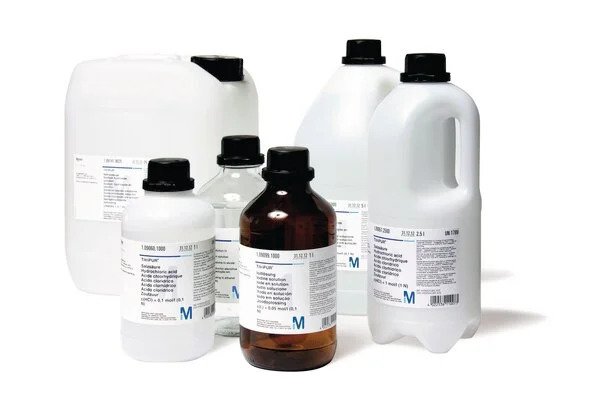
Description
Specifications Table
| Product Name | Acetone For Liquid Chromatography Lichro | 1.00020.4000 | Merck |
|---|---|
| Quantity/Pack Size | 4 LTR |
| Form | Liquid |
| Grade | HPLC Grade |
| Application | Liquid Chromatography, Analytical Testing |
Product Description
When precision matters in liquid chromatography, the quality of your solvent can make all the difference. Acetone For Liquid Chromatography Lichro by Merck is a high-purity, HPLC-grade solvent designed specifically for analytical applications where consistency and accuracy are non-negotiable. Whether you’re a researcher, student, or educator, this solvent ensures reliable performance in your lab experiments.
HPLC-grade acetone is essential for achieving sharp peaks and minimal interference in chromatographic separations. Unlike technical-grade solvents, this variant undergoes rigorous purification to remove impurities that could compromise your results. The Lichro designation from Merck guarantees adherence to strict quality standards, making it a trusted choice in laboratories across India.
One of the key advantages of using this acetone is its low UV absorbance, which is critical for detectors in HPLC systems. This property ensures that your sample signals remain clear and unobstructed, allowing for accurate quantification. Additionally, its controlled evaporation rate makes it suitable for both isocratic and gradient elution methods.
For students working on research projects or educators demonstrating chromatographic techniques, this solvent provides the reliability needed to produce repeatable results. Its compatibility with a wide range of stationary phases further enhances its versatility in different analytical setups.
Upgrade your lab’s chromatography performance with Merck’s HPLC-grade acetone. Order now at eqipped for fast delivery across India.
Why HPLC-Grade Acetone Matters in Your Lab
Not all acetone is created equal. While general-purpose acetone may suffice for cleaning or basic extractions, analytical applications demand a higher standard. Here’s why HPLC-grade acetone is indispensable:
First, impurity levels are drastically reduced. Trace contaminants like water, aldehydes, or other organic compounds can alter retention times or cause baseline noise in chromatograms. Merck’s Lichro acetone undergoes multiple distillation and filtration steps to eliminate these interferences.
Second, batch-to-batch consistency is guaranteed. In research, reproducibility is everything. Using a solvent with variable purity can lead to inconsistent results, wasting time and resources. This product is manufactured under controlled conditions to ensure uniformity across different production lots.
Finally, it meets the stringent requirements of modern HPLC systems. As instrumentation becomes more sensitive, the need for ultra-pure solvents grows. This acetone is tested to comply with pharmacopeial standards, making it suitable for both academic and industrial applications.
Applications in Liquid Chromatography
This HPLC-grade acetone is primarily used in:
Reverse-phase chromatography: As a component in mobile phases, it helps elute moderately polar compounds efficiently.
Normal-phase chromatography: Used in gradient systems to adjust polarity for better separation of analytes.
Sample preparation: Ideal for dissolving samples before injection, ensuring complete solubility without introducing artifacts.
Column conditioning: Helps maintain column performance by removing residual contaminants between runs.
For educators, this solvent is excellent for teaching chromatographic principles. Its predictable behavior allows students to focus on understanding retention mechanisms rather than troubleshooting solvent-related issues.
Safety and Handling
While acetone is a common laboratory solvent, proper handling is essential. Always use it in a well-ventilated area or under a fume hood to avoid inhalation. Wear appropriate personal protective equipment, including nitrile gloves and safety goggles, as acetone can irritate skin and eyes.
Store the solvent in a cool, dry place away from direct sunlight and ignition sources. Keep containers tightly sealed to prevent evaporation and contamination. Dispose of waste acetone according to local regulations for hazardous chemical waste.
Need bulk quantities for your research lab? Contact eqipped for customized packaging and competitive pricing.
FAQs
What makes HPLC-grade acetone different from regular acetone?
HPLC-grade acetone undergoes additional purification steps to remove impurities like water, aldehydes, and other organic compounds. This ensures minimal interference in chromatographic separations, making it ideal for analytical applications.
Can I use this acetone for GC (Gas Chromatography) as well?
While primarily designed for liquid chromatography, this high-purity acetone can also be used in GC applications where a clean, residue-free solvent is required. However, always check compatibility with your specific GC method.
How should I store this acetone to maintain its purity?
Store the solvent in its original, tightly sealed container in a cool, dry place away from direct sunlight. Avoid exposure to air, which can introduce moisture or contaminants.
Is this acetone suitable for UV detection in HPLC?
Yes, this HPLC-grade acetone has low UV absorbance, making it compatible with UV detectors commonly used in HPLC systems. It ensures clear baseline signals without interference.
Can students use this acetone for undergraduate lab experiments?
Absolutely. Its high purity and consistent performance make it an excellent choice for educational settings where reliable results are essential for learning chromatographic techniques.