Description
Specifications Table
Product Name – ACETONITRILE 99.9% LC-MS
Quantity/Pack Size – 1000 ml
Form – Liquid
Grade – LC-MS (HPLC/UHPLC)
Application – Chromatography, mass spectrometry, sample preparation
Product Overview
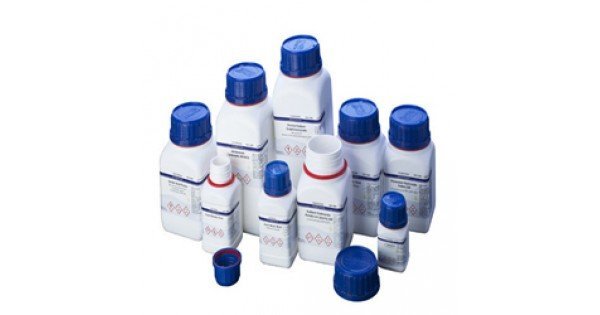
ACETONITRILE 99.9% LC-MS is a high-purity solvent designed for demanding chromatographic and mass spectrometry applications. With a minimum purity of 99.9%, this grade ensures ultra-low UV absorption, making it ideal for sensitive HPLC and UHPLC analyses. The solvent undergoes rigorous purification to eliminate impurities, including residual water, acids, and aldehydes, which could interfere with analytical results. Its low particulate content and consistent batch-to-batch performance guarantee reliable baseline stability and peak resolution. The acetonitrile is packaged in amber glass bottles to prevent photodegradation, preserving its integrity during storage. Compatible with most organic and aqueous mobile phases, this grade is optimized for gradient elution methods and high-throughput workflows. The absence of stabilizers or additives ensures compatibility with a wide range of detectors, including UV, PDA, and MS. Its low viscosity and volatility further enhance efficiency in sample preparation and instrument performance.
FAQs
1
What is the difference between LC-MS grade and HPLC grade acetonitrile?
LC-MS grade acetonitrile undergoes additional purification to reduce ionic and non-volatile impurities, making it more suitable for mass spectrometry applications where even trace contaminants can affect ionization efficiency. 2
Can this acetonitrile be used for protein precipitation?
Yes, the high purity and low water content make it effective for protein precipitation protocols, though the specific protocol may require additional optimization based on sample type. 3
How should this solvent be stored to maintain its purity?
Store the bottle tightly sealed in a cool, dry place away from direct sunlight and moisture. Amber glass packaging helps protect it from light-induced degradation. 4
Is this acetonitrile compatible with plastic labware?
While it can be used with some plastics like PTFE or HDPE, prolonged contact may cause swelling or leaching. Glass or solvent-resistant polymers are recommended for long-term storage. 5
What alternatives exist if this grade is unavailable?
For less demanding applications, HPLC-grade acetonitrile may suffice, though LC-MS grade is preferred for trace analysis due to its superior purity profile.