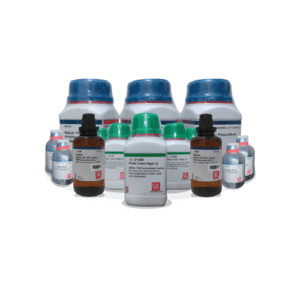
Description
Specifications Table
| Product Name | Aluminium Oxide Activated (Acidic) | 66289 | SRL Chem |
|---|---|
| Pack Size | 500 Gms, 5 Kg, 25 Kg |
| Form | Fine Powder |
| Grade | Lab Grade |
| Application | Chromatography, Adsorption, Catalyst Support |
Product Description
What is Aluminium Oxide Activated (Acidic)?
Aluminium Oxide Activated (Acidic) is a highly porous, fine powder used extensively in laboratories for chromatography, adsorption, and as a catalyst support. Its acidic nature makes it ideal for separating and purifying compounds in research and industrial settings. Whether you’re a student setting up a chromatography column or a researcher refining a chemical process, this lab-grade alumina delivers consistent performance.
Key Applications in Labs
This versatile adsorbent is a staple in chemistry labs. Researchers rely on it for column chromatography to separate mixtures based on polarity. Its high surface area and acidic properties also make it effective for drying gases and liquids, removing impurities, and even as a catalyst in organic synthesis. Educators use it in practical demonstrations to teach adsorption principles, while industries leverage it for large-scale purification processes.
Why This Grade Matters
Not all alumina is created equal. The lab-grade, acidic variant ensures minimal impurities, which is critical for accurate experimental results. Unlike neutral or basic alumina, the acidic form interacts differently with polar compounds, offering better selectivity in separations. For students and researchers, this means fewer errors and more reliable data. eqipped sources this product from trusted manufacturers to guarantee consistency batch after batch.
How to Use It Effectively
For chromatography, pack the alumina evenly into a column, ensuring no air gaps. Pre-wet it with a non-polar solvent like hexane before loading your sample. The acidic nature helps retain basic compounds, allowing for cleaner separations. In adsorption applications, spread the powder thinly for maximum surface contact. Always store it in a dry place to maintain its activity—moisture can degrade its performance over time.
Safety and Handling
While generally safe, aluminium oxide powder can irritate the respiratory system if inhaled. Work in a well-ventilated area or under a fume hood, and wear a dust mask if handling large quantities. Avoid skin contact, as prolonged exposure may cause dryness. Dispose of used alumina according to local lab waste regulations—never pour it down the drain.
FAQs
What’s the difference between acidic and neutral alumina?
Acidic alumina has a lower pH and is treated to enhance its affinity for basic compounds, making it ideal for separating mixtures where polarity matters. Neutral alumina is less reactive and suits general-purpose applications.
Can I reuse activated alumina?
Yes, but its efficiency drops after each use. Regenerate it by heating at 150–200°C for a few hours to remove adsorbed moisture and contaminants. However, for critical applications, fresh alumina is recommended.
Is this suitable for gas drying?
Absolutely. Its high surface area and porosity make it excellent for drying gases like air or nitrogen in lab setups. Just ensure the gas is pre-filtered to avoid clogging the alumina bed.
How do I choose the right pack size?
For small-scale lab work, 500 gms is sufficient. Researchers running multiple experiments may opt for 5 kg, while industrial users often go for the 25 kg pack for bulk applications.
Does eqipped offer bulk discounts?
Yes, contact our support team for bulk pricing on larger quantities. We also provide customized packaging for institutional orders.